
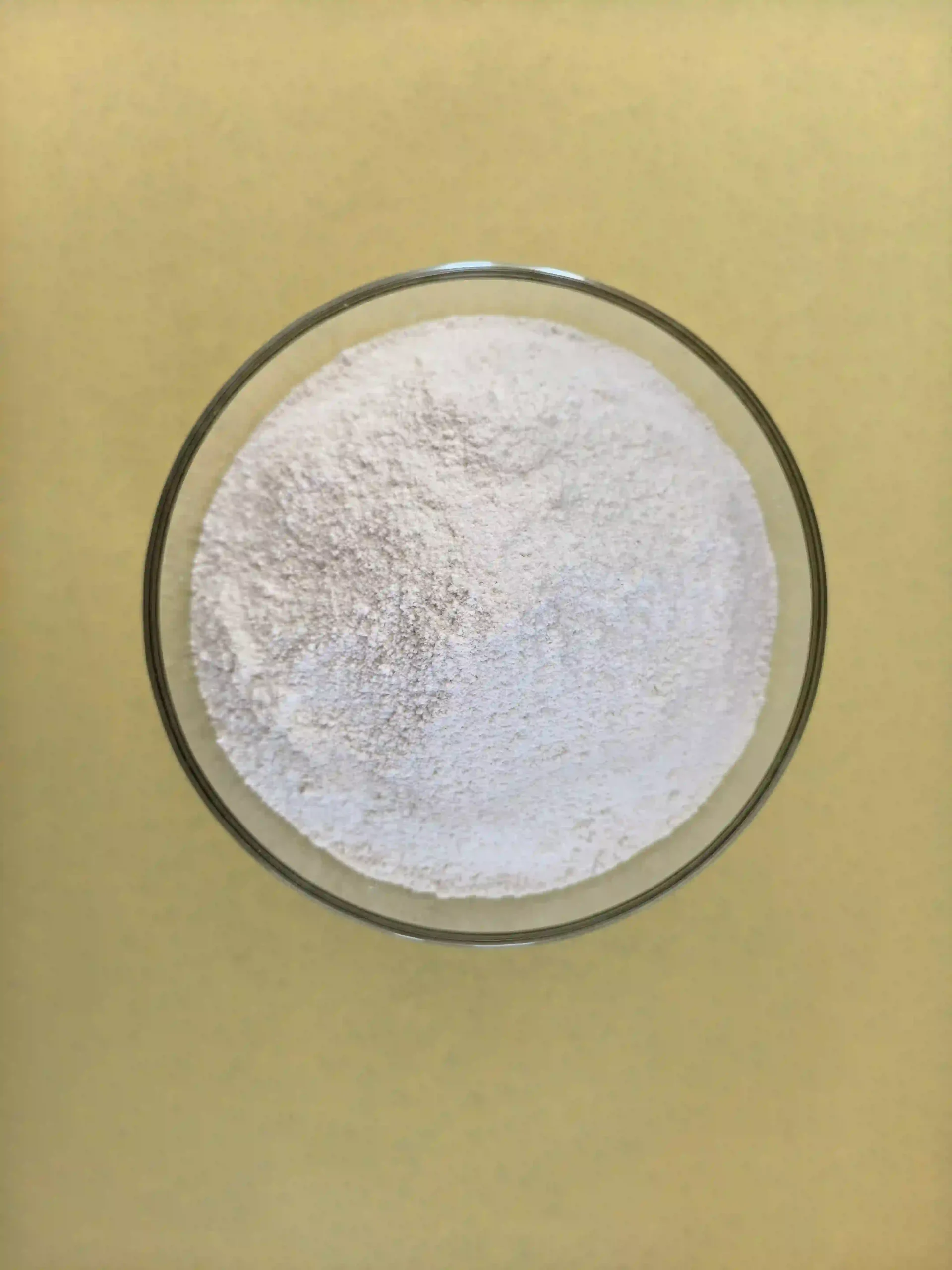
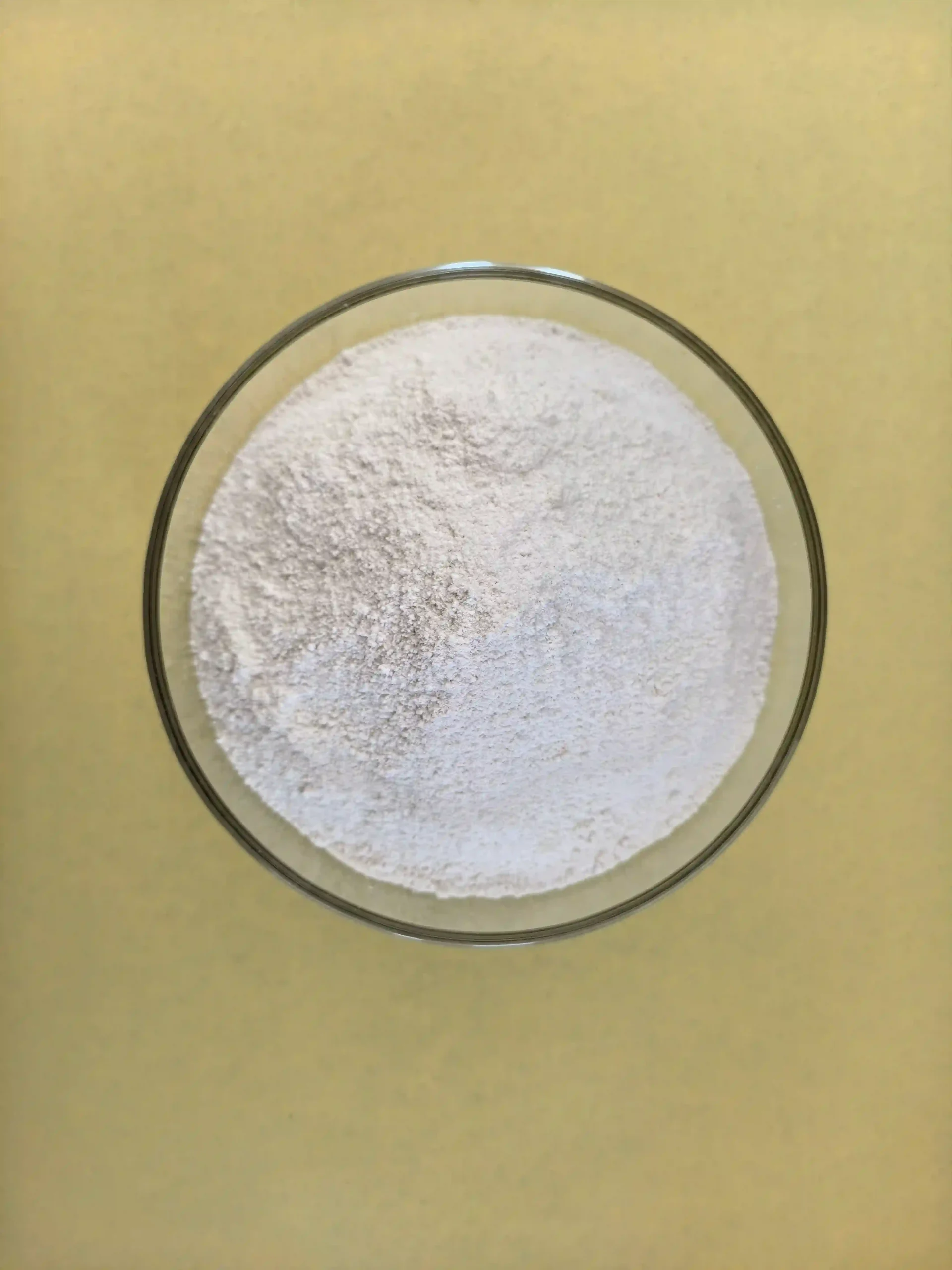
Pinholes, uneven cells, and foam shrinkage can turn a promising formulation into a costly production problem. For manufacturers of EVA shoe soles, PVC foam sheets, and rubber sponge products, the challenge is to generate gas at the right time and retain it long enough to create a stable cellular structure. สังกะสีออกไซด์ที่มีฤทธิ์ทำงาน serves as an activator in compatible chemical foaming systems, helping regulate blowing-agent decomposition and improve process control. Selecting the right Active Zinc Oxide grade requires attention to activation temperature, dispersion, cell uniformity, and formulation compatibility.
How Does Active Zinc Oxide Improve Chemical Foaming Agent Performance?
Chemical foaming agents release gas under suitable processing conditions. As the gas expands inside a polymer or rubber compound, it creates the cells responsible for foam’s low density, cushioning, flexibility, or insulation properties.
Gas must be released at the right stage so the material can expand and retain it; otherwise, defects such as pinholes, oversized cells, or inconsistent density appear.
Active Zinc Oxide is used as an activator in compatible chemical blowing-agent formulations. Its surface characteristics can promote the decomposition of certain blowing agents, helping manufacturers align gas generation with the processing window of the compound. The effectiveness of Active Zinc Oxide depends on the blowing-agent chemistry, dosage, and surrounding additive system rather than on the activator alone.
Why foaming agent activation temperature matters
A blowing agent’s decomposition behavior must match the processing conditions of the material. If gas generation begins too late, expansion may be insufficient. If it starts too early, gas may escape before the compound can retain it.
Daoan Chemical notes pure AC foaming agent decomposes at about 190–205°C, while many EVA and PVC systems process at 150–180°C. This gap shows why activation adjustment can matter, though actual temperatures always depend on the full formulation.
Manufacturers should therefore evaluate Active Zinc Oxide in the complete formulation rather than judge it solely by its effect on decomposition temperature.
How activation influences foam cell formation
Stable foam formation requires several events to occur in the right sequence:
- The compound reaches the appropriate processing state.
- The chemical blowing agent releases gas at a suitable rate.
- The material retains enough strength or elasticity to contain expanding gas.
- Where crosslinking is required, curing develops at a suitable rate to stabilize the cells.
Poor coordination leads to uneven cells, inconsistent density, or dimensional instability. Active Zinc Oxide helps with activation control but cannot fix every defect on its own.
Why the complete additive system matters
Foaming formulations may contain zinc stearate, calcium stearate, crosslinking agents, processing aids, and stabilizers. These ingredients can influence reaction timing, dispersion, and material behavior.
Daoan Chemical notes potential synergy between Active Zinc Oxide and zinc stearate; the ratio must be verified by testing for each formulation.
In crosslinked EVA and rubber systems, curing time is especially important. If the compound develops strength too slowly, cells may collapse; if it becomes rigid too early, expansion may be restricted.
Before changing the activator, record the current formulation, processing temperatures, cycle time, product density, and main defects. Controlled trials can help establish whether Active Zinc Oxide contributes to the problem or whether another variable needs adjustment.
What Properties Make Active Zinc Oxide Suitable for Foam Manufacturing?
Active Zinc Oxide and conventional zinc oxide share the same basic chemical formula, ZnO. Their practical differences depend on specific surface area, particle properties, surface activity, and dispersion behavior.
Buyers should evaluate Active Zinc Oxide against their own process requirements rather than assume one grade suits every system.
Surface activity, dispersion, and consistency
Specific surface area is one useful parameter when comparing zinc oxide grades. A higher surface area generally provides more available surface per unit of mass, although performance does not increase in direct proportion to this value. Particle morphology, surface chemistry, agglomeration, and purity can also affect behavior.
Even a suitable Active Zinc Oxide grade may perform inconsistently if it is not distributed evenly throughout the compound. Poor feeding, agglomeration, or an unsuitable mixing sequence can reduce the benefits expected from the material.
Manufacturers should review the technical data sheet, assess dispersion, and check whether repeated batches deliver consistent results. For industrial production, repeatability is often more valuable than an excellent result from a single laboratory sample.
How active and conventional zinc oxide compare
The following table summarizes general tendencies rather than guaranteeing that every active grade will outperform every conventional grade.
| Evaluation factor | Conventional zinc oxide | ออกไซด์ของซิงค์แอคทีฟ |
|---|---|---|
| Surface characteristics | Depends on manufacturing process and grade | Often designed for higher surface activity |
| Interaction with formulation ingredients | Depends on particle and surface properties | May improve interaction in compatible systems |
| Dispersion requirements | Requires suitable mixing | Still requires suitable mixing and handling |
| Foaming performance | Depends on the blowing agent and formulation | Must be confirmed through application testing |
| Dosage requirements | Established through formulation trials | May offer opportunities for dosage optimization |
| Quality verification | Requires grade-specific technical data | Requires technical data and application validation |
Conventional zinc oxide may already meet the requirements of some formulations. Switching to Active Zinc Oxide is worthwhile when testing demonstrates a meaningful advantage in reaction control, product quality, or overall production cost.
Which technical specifications should buyers review?
Before comparing an Active Zinc Oxide supplier, request current technical documentation for the specific grade. Depending on the application, relevant information may include:
- Zinc oxide content and impurity limits.
- Specific surface area and particle-size characteristics.
- Moisture content and powder-handling requirements.
- Batch consistency and quality-control procedures.
- Packaging, storage, and traceability information.
- Suitability for the intended polymer, rubber, and blowing-agent system.
Not every parameter has equal importance in every application. Specifications should reflect the actual requirements of the formulation rather than an unnecessarily long list of preferred characteristics. Buyers should also confirm that the proposed Active Zinc Oxide grade is intended for the relevant application and that its documented properties are consistent with the supplier’s recommendation.
Which Foam Applications Can Benefit From Active Zinc Oxide?
The value of an activator depends on the finished product’s requirements. EVA footwear components, PVC foam sheets, and rubber sponge products all use cellular structures, but they differ in processing methods, mechanical requirements, and acceptable defects.
Selecting an appropriate Active Zinc Oxide grade starts with identifying the properties that matter most. A formulation designed for soft cushioning may require a different balance of expansion and recovery from one designed for a sealing profile. Application-specific testing is essential because the same activator may behave differently across polymer systems.
EVA foam for shoe soles and cushioning products
EVA foam is widely used in shoe soles, midsoles, slippers, cushioning components, and protective products. Manufacturers typically need to balance low density, softness, rebound, abrasion resistance, and dimensional stability.
Uneven cells create local differences in density and mechanical behavior. Pinholes affect surface quality, while inadequate gas retention leads to inconsistent expansion or dimensions.
In a compatible EVA formulation, Active Zinc Oxide can help regulate blowing-agent activation. When gas generation is properly coordinated with crosslinking, the compound retains expanding gas more effectively and develops a more consistent cellular structure.
For inconsistent density between batches, avoid simply increasing blowing-agent dosage. Instead, run a controlled trial comparing the current formulation with one containing a suitable Active Zinc Oxide grade. Evaluate apparent density, cell distribution, rebound, compression behavior, surface defects, dimensional stability, and scrap rate to determine whether the additive improves performance or whether the issue lies in curing, mold conditions, or mixing.
PVC foam sheets, profiles, and artificial leather
PVC foam is used in foam sheets, sealing profiles, artificial leather, and selected building and interior materials. Key priorities usually include uniform thickness, flexibility, smooth surfaces, and resistance to shrinkage.
Inconsistent cell structure often results from poorly coordinated gas release, material flow, and cell stabilization. Poor dispersion and unsuitable processing conditions can also cause defects.
Active Zinc Oxide may help adjust blowing-agent activation in compatible PVC systems, but it must be evaluated together with the resin, stabilizer package, plasticizers, and processing aids. Thermal stability is especially important—faster gas release should not come at the cost of color, processing behavior, or finished-product properties.
Use the same evaluation approach as for EVA foam, focusing on cell distribution, thickness variation, surface appearance, and shrinkage after cooling.
Rubber sponge and foamed rubber sealing products
Rubber sponge, sealing strips, and molded rubber foam components typically require elasticity, compression recovery, and resistance to repeated deformation.
Coordinate gas generation with vulcanization. If curing develops too slowly, cells may collapse; if the compound becomes rigid too early, expansion is restricted.
Active Zinc Oxide can act as an activator in compatible systems and may also participate in rubber-compounding chemistry. Its effect should be assessed alongside the complete curing formulation.
Evaluate using the same approach as for EVA foam, with particular attention to cell uniformity, compression set, elasticity, and dimensional stability.
Match the foam structure to the finished product.
The best foam is not necessarily the one with the greatest expansion or lowest density. A lightweight cushioning component may require resilience and compression recovery, while a sealing profile may prioritize dimensional accuracy and long-term compression performance.
Define the target product properties before changing the activator. This makes it easier to determine whether a formulation adjustment delivers a genuine improvement rather than simply changing the appearance of the foam. Active Zinc Oxide should be evaluated against these product requirements, not selected on the assumption that greater activity always produces better results.
How Can Manufacturers Reduce Pinholes, Uneven Cells, and Foam Shrinkage?
Production defects rarely have a single possible cause. Pinholes may result from gas escaping, poor dispersion, contamination, or an unsuitable heating profile. Shrinkage may be associated with cell instability, cooling conditions, or the mechanical behavior of the finished material.
Active Zinc Oxide can contribute to defect reduction when the underlying problem involves blowing-agent activation. The first step is to identify the source of the defect rather than automatically increase the additive dosage.
Identify the source of the defect.
Record where defects appear, when they develop, and whether they affect the entire product or only certain sections of a batch. A recurring issue in one area of a mold, for example, may point to local temperature or pressure conditions rather than insufficient activator.
Review the blowing-agent type and dosage, zinc oxide grade and addition level, dispersion quality, mixing sequence, processing temperature, curing conditions, mold pressure, and cooling cycle.
Change one major variable at a time whenever practical. This makes results easier to interpret and reduces the risk of introducing additional problems. If Active Zinc Oxide is being evaluated, keep other formulation variables consistent wherever possible so its contribution can be assessed more reliably.
Evaluate activation through controlled trials.
Compare the existing formulation with a candidate formulation under consistent conditions. Establish a control batch using the current additive system, then prepare a trial batch with the proposed Active Zinc Oxide grade while keeping other ingredients and processing conditions as consistent as possible.
If dosage optimization is needed, test several levels within a technically justified range based on supplier guidance, blowing-agent chemistry, and preliminary results. Avoid applying a universal dosage recommendation to different polymer systems.
Record the formulation and process conditions for each trial, then repeat promising tests to establish whether improvements are reproducible. This process can help distinguish the effects of the activator from those of mixing, curing, and temperature control.
Use measurable indicators to compare results.
Visual inspection is useful, but it cannot establish every aspect of foam quality. A product may look uniform while failing density, compression, or dimensional requirements.
| Performance indicator | What to measure | Why it matters |
|---|---|---|
| Apparent density | Density against product specifications | Confirms expansion and material consistency |
| Cell structure | Cell size, distribution, and visible defects | Identifies uneven expansion and unstable cells |
| Surface quality | Pinholes, cracks, and irregularities | Supports appearance and quality acceptance |
| Compression set | Permanent deformation after compression | Important for seals and cushioning |
| Resilience | Recovery after deformation | Relevant to many EVA and rubber foam products |
| Mechanical properties | Suitable tensile, tear, or abrasion tests | Checks functional requirements |
| Dimensional stability | Shrinkage and deformation after processing | Important for sheets, profiles, and molded parts |
| Production performance | Cycle time, scrap, and rework | Helps assess the economic value of a change |
Choose tests according to the intended application. Use consistent measurement methods, sample conditioning, and acceptance criteria when comparing control and trial batches. Record the results instead of relying on informal observations.
Evaluate the economic impact of a formulation change
A higher-priced Active Zinc Oxide grade can still be cost-effective if it reduces scrap or improves consistency. Always compare cost per acceptable finished unit (including dosage, scrap, and rework), not just price per kilogram. Confirm the improvement is repeatable before full adoption.
How Should Buyers Select Active Zinc Oxide for Foaming Agents?
Industrial buyers should evaluate more than unit price or general claims of high activity. The grade must match the blowing agent, polymer system, processing conditions, and finished-product specification. Choosing Active Zinc Oxide for foaming agents requires both technical review and practical validation.
Define technical requirements before requesting quotations.
Start by documenting the application and the problem the additive needs to solve. A manufacturer seeking to reduce pinholes may need a different evaluation plan from one aiming to improve compression recovery or shorten production cycles.
A purchasing specification should identify:
- The polymer or rubber system, such as EVA, PVC, or rubber.
- The chemical blowing-agent type and grade.
- Current processing temperatures and curing conditions.
- Required zinc oxide properties and purity.
- Target density, cell structure, and mechanical performance.
- Packaging, storage, and traceability requirements.
Separate mandatory specifications from development targets. This helps suppliers recommend suitable grades without treating desired improvements as guaranteed outcomes.
When comparing Active Zinc Oxide products, confirm that the proposed grade is appropriate for the intended formulation. A grade suitable for EVA foam may not deliver the same results in PVC foam or rubber sponge because the surrounding chemistry and processing conditions differ.
Verify technical documents and supply consistenc.y
Request a current technical data sheet and, where available, a certificate of analysis for the relevant batch. Confirm that the documented properties match the intended formulation.
For ongoing supply, consider manufacturing consistency, packaging integrity, storage recommendations, and batch documentation. If a supplier recommends replacing an existing grade, ask which technical differences support the recommendation and how they are expected to affect the formulation.
Claims about lower dosage, faster processing, or improved mechanical properties should be validated under comparable conditions. Results from one polymer system should not automatically be applied to another. A reliable Active Zinc Oxide supplier should be able to provide relevant product documentation and explain the scope of its recommendations.
Qualify the material before full-scale production.
A practical qualification process has four stages:
- Document review to confirm that the candidate grade meets the initial specification.
- Laboratory testing to assess compatibility, dispersion, and preliminary foaming behavior.
- Production trials to evaluate cell structure, finished-product performance, and process stability.
- Ongoing batch verification to confirm consistent results during routine manufacturing.
Retain representative samples and record the grade, batch number, dosage, processing conditions, and test results. For manufacturers using multiple production lines, qualification should also account for differences in mixing equipment, heating profiles, and mold conditions.
Questions to ask before placing an order
Confirm whether the proposed grade is intended for the specific foaming system, which technical parameters are documented, and what handling and storage conditions are recommended. Ask whether application guidance and samples are available for controlled testing.
A reliable supplier evaluation considers technical suitability, reproducible trial results, supply consistency, and total production cost. These factors provide a stronger basis for long-term purchasing decisions than unit price alone.
บทสรุป
Active Zinc Oxide can help regulate chemical blowing-agent activation in compatible EVA, PVC, and rubber foaming systems. When matched to the formulation and processing conditions, it may support more uniform cells, better dimensional stability, and consistent finished-product quality.
The best results come from appropriate material selection, controlled trials, and measurable performance criteria. Daoan Chemical supplies Active Zinc Oxide products for industrial applications. Contact the team to request the relevant technical data sheet, discuss your foaming formulation, and explore sample testing before full-scale production.