
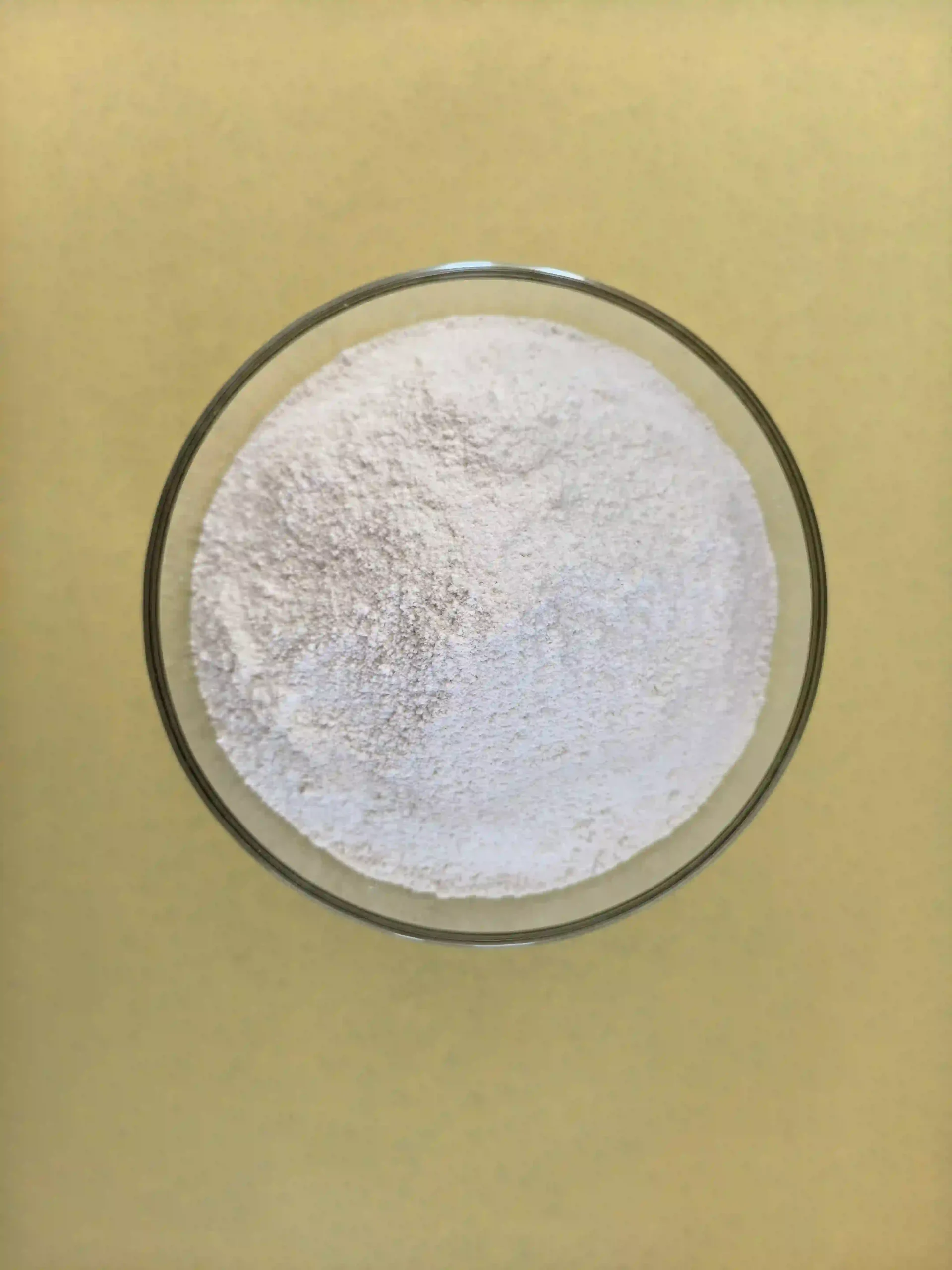
Today, the form and quality of raw materials are as important as their chemical composition. Zinc oxide, a versatile material that is commonly utilized in rubber, coating, food, chemical, and medical fields, has traditionally been provided in a powdered form. However, powdered zinc oxide is effective, but it can present problems regarding dosing, safety, and effectiveness. It can easily create dust during the feeding process, cause issues with automated systems, and lead to inconsistent integration into formulations, which can lead to problems for manufacturers who want to produce stable, high-quality output.
As a company that has over 25 years of experience in the production and distribution of chemical and rubber machinery, we understand the operational difficulties firsthand. To address the evolving demands of modern manufacturing processes, granulated zinc oxide has been considered a practical substitute. Unlike the powdered form of zinc oxide, the granulated version retains all of the chemical properties inherent to it, while improving its effectiveness, handling, and safety.
Zinc oxide in granulated form is produced via a process that is free of dust. This process is intended to compact fine, active powder into uniform granules. This procedure guarantees that the granules have a high degree of dispersibility and reactivity, without the need for additional binders or vehicles. For our clients, this means increased efficiency in production, decreased issues with operational safety, and more convenient handling.
Granulated Zinc Oxide vs Powdered Zinc Oxide
Though chemically identical, granulated and powdered zinc oxide differ significantly in how they behave during production. Understanding these differences is key to evaluating which form is suitable for modern manufacturing needs.
Advantages of granulated zinc oxide over traditional powder include:
- Handling and Flowability: Granules consistently travel through hoppers, conveyors that rotate, and automated feeders, which reduces the likelihood of blockages and bridges. Zinc oxide powder is frequently aggregated, which results in downtime and inconsistent dosing frequency.
- Dust Control and Safety at Work: Granules produce little airborne dust, which results in a cleaner production environment and increased safety for the operator. This is of special significance for large factories and automated processes, as dust can directly affect both health and the maintenance of equipment.
- Constant Dosing and Integrity: Granules are consistent in their dosing and association with rubber, coating, and feed. No additional dispersing agents are required. This guarantees the consistent quality of the product and decreases the amount of material waste.
- Transport and Storage Stability: The granular form is resistant to mechanical pressure during the stacking of pallets and long-distance travel, which prevents the formation of breakage and the secondary generation of dust that can adversely affect both the quality of the material and the hygienic conditions of the factory.
Operational Efficiency: By minimizing the problems associated with handling and ensuring a smooth flow in automated systems, granulated zinc oxide will reduce downtime, lower costs, and maintain a consistent output.
By addressing the common operational issues of powdered zinc oxide, granulated zinc oxide is particularly suited for modern, automated, and continuous production environments. It enables manufacturers to achieve more reliable operations, higher efficiency, and improved end-product consistency.
Key Industrial Advantages of Granulated Zinc Oxide
Beyond the direct handling improvements, granulated zinc oxide offers several measurable industrial advantages that make it highly practical for large-scale production:
-
Rapid and Uniform Integration: The granules mix evenly with rubber compounds, coatings, or feed, preventing localized concentration differences that could otherwise compromise product quality.
-
Compatibility with Automated Systems: Granules flow smoothly through screw feeders, loss-in-weight feeders, and other automated dosing systems. This supports continuous production, reduces manual intervention, and ensures precise measurement for consistent formulations.
-
Reduced Dust Generation: Granules significantly reduce airborne particles, promoting cleaner workplaces and protecting operators’ respiratory health.
-
Durable During Transport and Storage: Granules withstand pallet stacking, vibration, and long-distance shipping without breaking down, maintaining their integrity until reaching production lines.
-
Cost-Efficient Production: By reducing downtime, avoiding blockages, and minimizing material waste, granulated zinc oxide improves operational efficiency and lowers production costs for factories.
These advantages are particularly important in industries where production efficiency, product consistency, and workplace safety are critical. For customers seeking a reliable solution for automated or continuous production lines, granulated zinc oxide offers tangible operational benefits.
Properties and Features of Granulated Zinc Oxide
Granulated zinc oxide combines the chemical performance of traditional powders with a physical form designed for modern production needs. Key features include:
-
Uniform Granule Size: Ensures predictable flow in hoppers and conveyors, supporting smooth automated feeding.
-
High Compressive Strength: Resists crushing during pallet stacking and long-distance shipping, preventing secondary dust generation.
-
Carrier-Free Microgranulation: Preserves chemical reactivity and dispersibility without requiring additives.
-
Enhanced Flowability: Supports precise dosing in quantitative feeding systems, critical for consistent production results.
-
Reduced Dust: Improves safety and cleanliness in production areas, aligning with modern occupational health standards.
-
Versatility: Suitable for use in rubber, coatings, chemical production, feed, and medical-grade rubber applications.
These features make granulated zinc oxide a practical, reliable choice for manufacturers seeking to optimize production while maintaining product quality and safety standards.
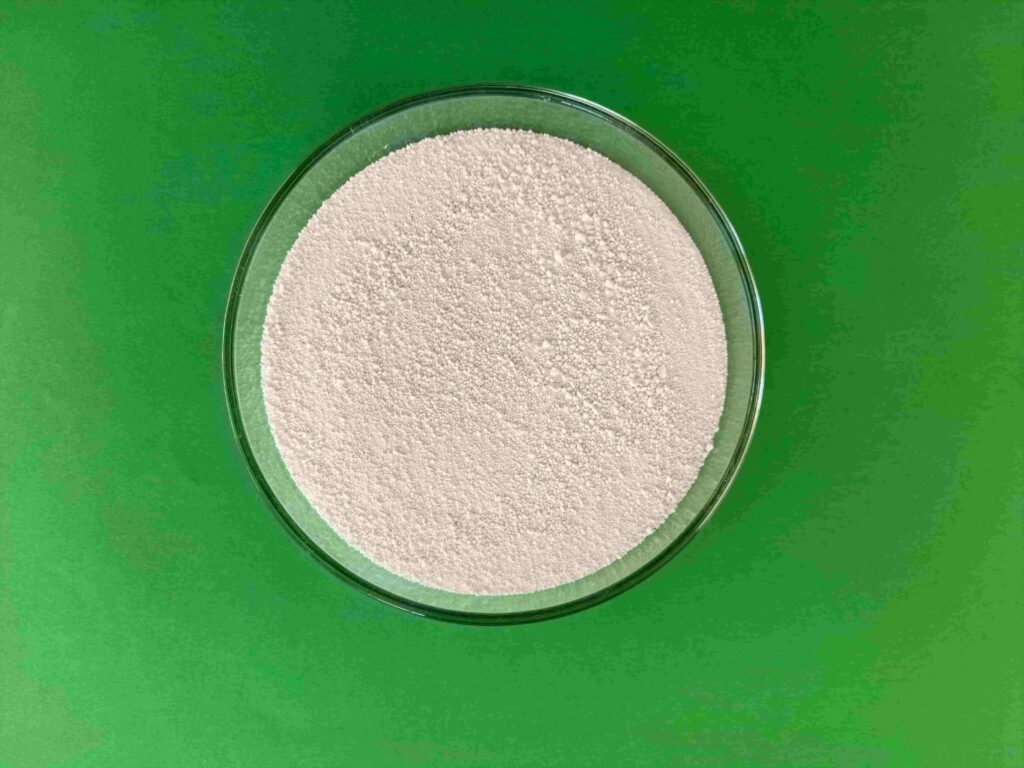
Applications in Rubber and Chemical Industries
Granulated zinc oxide has wide-ranging applications across several industrial sectors. Its uniform dispersibility and mechanical stability make it particularly valuable in high-precision manufacturing.
-
Rubber Products: Granulated zinc oxide is ideal for molded and extruded rubber products, hoses, belts, tires, inner tubes, and automotive components. Its even distribution ensures consistent vulcanization, mechanical performance, and surface quality.
-
Rubber-Plastic Foams: Granules integrate evenly into foam matrices, supporting stable cell structure, mechanical strength, and uniform material performance.
-
Medical Rubber Components: Cleaner handling reduces contamination risk, meeting strict hygiene and regulatory standards in medical and laboratory applications.
-
Coatings and Chemical Production: Granulated zinc oxide ensures precise dosing for paint and coating formulations, as well as zinc salt production. Its flowability and reduced dust facilitate large-scale chemical processing.
-
Feed Industry: Granules integrate efficiently into feed mixtures, ensuring uniform zinc supplementation for animals while minimizing dust and handling issues.
By supporting these applications, granulated zinc oxide helps manufacturers achieve more consistent product quality and more efficient production processes.
Case Examples and Industrial Benefits
In practice, factories using granulated zinc oxide have reported measurable benefits. For instance, rubber manufacturers integrating granules into their mixing lines have observed:
-
Reduced downtime due to less bridging and clumping.
-
Improved batch consistency with precise dosing.
-
Cleaner work environments and reduced maintenance requirements.
-
Lower raw material waste due to minimized spillage and consistent integration.
Similarly, coating manufacturers using granules in automated mixers have experienced faster and more uniform dispersion, reducing formulation errors and improving coating performance. In feed production, granules allow automated blending with minimal dust, protecting equipment and workers while maintaining nutritional consistency.
These real-world examples illustrate that granulated zinc oxide is not just a technical improvement—it directly contributes to higher operational efficiency, safer workplaces, and better product quality.
Packaging, Handling, and Logistics
Granulated zinc oxide is packaged to ensure stability during storage and transport. Standard practices include:
-
20 kg per bag, 50 bags per pallet, for a total of 1,000 kg per pallet.
-
Container shipping: Each container typically holds 20 pallets, totaling 20 tons.
The granular structure ensures resistance to mechanical stress during transportation, pallet stacking, and long-distance shipping. It prevents secondary dust generation, maintains product integrity, and supports automated feeding systems in production. These features reduce operational concerns, material loss, and additional handling costs.
Industry Trends and Sustainability
Granulated zinc oxide aligns with current industry trends emphasizing automation, sustainability, and workplace safety.
-
Automation: As production lines increasingly rely on continuous, automated operations, materials with predictable flow and precise dosing become critical. Granules meet this requirement effectively.
-
Environmental Compliance: Reduced dust generation lowers environmental impact, supporting cleaner, greener production practices.
-
Occupational Safety: Less airborne particulate reduces respiratory risks and improves overall workplace safety.
-
Operational Efficiency: Granules reduce downtime caused by blockages or dosing errors and help minimize waste, supporting cost-effective production.
Adopting granulated zinc oxide allows manufacturers to modernize production lines while maintaining environmental responsibility and high product quality.
Zinc oxide in granulated form is an enhanced, customer-oriented approach to traditional powdered zinc oxide. Its consistent granule size, high tensile strength, and micro-bed-based production process facilitate enhanced fluidity, reduced dust, and precise dosing, all of which are essential for automated and continuous production lines.
For companies that produce rubber, coatings, chemicals, or food, the granulated form of zinc oxide increases production efficiency, guarantees consistent quality, and reduces the risk of failure. Its powerful mechanical nature, combined with compatibility with modern automated systems, makes it an ideal choice for customers seeking a dependable, high-powered material.
By selecting granulated zinc oxide from a renowned factory that has produced this product for decades, customers will gain not only technical superiority, but also professional support, consistent supply, and flexible customization options that are flexible.
We invite potential clients to contact us to discuss their specific concerns, request samples, and explore how granulated zinc oxide can augment your production processes and improve your product.