
Mixing is the core process in rubber product manufacturing, whose primary task is to uniformly disperse various compounding ingredients such as carbon black, vulcanizing agents, accelerators, and antioxidants into the rubber matrix, forming a stable and homogeneous rubber compound system. Dispersion quality directly determines the processability of the compound, the final physical and mechanical properties of the vulcanizate (e.g., tensile strength, tear strength, abrasion resistance), and appearance quality, and is critical to preventing premature product failure. However, poor dispersion in rubber compounds is a common quality defect in actual production, leading to performance fluctuations, reduced qualification rates, increased production costs, and lower efficiency. Based on practical production experience, this paper systematically summarizes the typical manifestations, root causes, and actionable solutions for poor dispersion, helping enterprises standardize production and improve product quality.
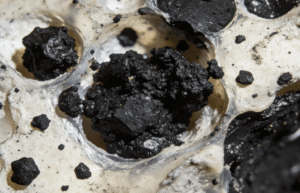
Poor dispersion degrades compound processability: during extrusion, it causes rough surfaces, unstable flow, and frequent breaks; calendering leads to bubbles, glossy streaks, uneven thickness, and poor lamination; molding results in incomplete filling and short shots; vulcanization causes local scorch or under-cure with abnormal torque curves. These issues reduce processing efficiency and compromise final product quality. Vulcanized products often show surface defects such as pits, pinholes, blisters, and orange peel; cross-sections contain voids, delamination, or visible particulate inclusions. Mechanical properties drop significantly, failing to meet specifications for tensile strength, tear strength, and abrasion resistance; heat buildup during fatigue increases, and service life shortens. Some products also suffer from blooming, whitening, or oil exudation caused by the migration of poorly dispersed ingredients. For light-colored rubber products, dispersion issues cause noticeable color spots and uneven tinting, directly lowering appearance qualification rates.
Poor dispersion in rubber compounds stems from a combination of raw materials, equipment, processing, operation, and formulation factors. Based on production practice, the main causes fall into five categories:
- Raw Material Factors
Raw material properties and quality consistency form the basis for uniform dispersion and are often overlooked.
- Inherent characteristics of compounding ingredients: Finer particle size, larger specific surface area, or higher structure of carbon black strengthen inter-aggregate forces, making dispersion difficult. Silica has high oil absorption and poor hydrophobicity; without silane modification, it readily forms agglomerates.
- Moisture and caking: Inorganic fillers such as zinc oxide and calcium carbonate are highly hygroscopic. If stored in humid conditions or not pre-dried, they form hydrated agglomerates that resist breaking down during mixing. Powdered ingredients cake during long-term storage; direct use without sieving creates hard-to-disperse nuclei.
- Substandard rubber: Outdated raw rubber with gel or insufficient mastication leads to low plasticity, failing to provide a good carrier for dispersion. In blends, incompatible rubbers without compatibilizers cause uneven ingredient distribution between phases.
- Equipment Performance and Maintenance
Equipment provides the shear force essential for uniform dispersion. Inadequate capacity or poor maintenance directly causes poor dispersion.
- Insufficient shearing capability: Unreasonable speed ratio or faulty gap adjustment on open mills limits shear force. Improper rotor selection for internal mixers (e.g., wrong use of four‑wing tangential [high shear] or intermeshing [mild mixing] rotors) and inappropriate fill factor cause slippage or poor flow, weakening shear action.
- Worn key parts: Wear on mixer chamber walls and rotor tips increases clearances and reduces shear efficiency. Rough or scratched open‑mill rolls hinder bank formation and mixing uniformity.
- Malfunctioning auxiliary systems: Insufficient ram pressure fails to push stock into high‑shear zones. Defective temperature control and inadequate cooling cause a rapid temperature rise. Inadequate cleaning allows leftover compound or agglomerates to contaminate new batches.
- Improper Mixing Parameters
Incorrect process settings are a leading cause of poor dispersion.
- Uncontrolled temperature: Low temperature increases compound hardness; although shear force is high, ingredients are hard to wet and incorporate. High temperature softens the compound, lowers shear, promotes scorch, and accelerates thermal oxidative degradation of rubber chains. Optimal dump temperature varies with rubber type.
- Unsuitable mixing time: Too short a time prevents full shear and breakdown of agglomerates. Too long a time causes excessive heating and gelation, degrading dispersion.
- Wrong charging sequence: Simultaneous addition of liquid plasticizer and carbon black reduces shear stress and causes carbon black agglomeration. Adding large amounts of filler before fine chemicals (accelerators, antioxidants) results in encapsulation. Early addition of sulfur and other vulcanizing agents risks scorching and disturbs dispersion.
- Non‑Standard Operation
Operator behavior directly affects mixing quality; human error frequently causes poor dispersion.
Unstandardized charging: Powdered ingredients are added without sieving. Feeding too fast or in excessive batches prevents timely encapsulation and promotes agglomeration.
Inadequate mixing practices: Insufficient tight passes, uneven folding, and dead zones on open mills; insufficient cleaning of internal mixer chambers leaves unmixed residues.
Insufficient skill: Operators lack knowledge of ingredient properties and fail to adjust parameters according to stock condition. Inspectors cannot assess dispersion properly, allowing off‑grade compound to proceed.
- Inappropriate Formulation
Flawed formulation creates inherent dispersion difficulties.
- Unbalanced ingredient ratios: Excessive use of hard particles and fine fillers exceeds the rubber’s dispersion capacity. Poorly matched plasticizers reduce wetting and compatibility.
- Lack of dispersing aids: No coupling agent for silica, no stearic acid, PEG, or other dispersants for carbon black increases agglomeration tendency. Large polarity mismatch (e.g., non‑polar natural rubber with polar silica) causes poor wetting, floating, or agglomeration of fillers.
To resolve poor dispersion in rubber compounds, a holistic approach of source control, process optimization, equipment reliability, and standardized operation must be adopted to achieve precise control of dispersion uniformity.
Strict Raw Material Control and Preprocessing
- Standardize raw material selection based on performance requirements and dispersibility.
- Improve storage: store powders and rubber in dry, ventilated conditions to prevent caking; monitor shelf life and reject outdated, gelled rubber or degraded ingredients.
- Implement preprocessing: sieve all powders before use; pre-dry highly hygroscopic fillers (zinc oxide, silica), extending drying time in high humidity; fully masticate rubber to reach target plasticity; pre-blend fine chemicals to boost dispersion efficiency.
Optimize Equipment and Strengthen Maintenance
- Select appropriate mixing equipment and rotor designs according to compound type and production scale.
- Conduct routine maintenance: inspect and replace worn rotors and chamber surfaces; polish open mill rolls to ensure smoothness; verify temperature, cooling, and ram pressure systems for accurate control; thoroughly clean chambers and surfaces after each batch to avoid cross-contamination.
Optimize Mixing Process and Parameter Control
- Precisely control temperature within the optimal window for each rubber grade using staged temperature regulation.
- Set proper mixing time and rotor speed based on formulation and equipment to avoid under- or over-mixing.
- Follow standardized charging sequences for fine chemicals and fillers.
Standardize Operations and Upgrade Workforce Skills
- Establish and enforce standard work instructions covering charging sequence, rate, mill passes, and folding methods.
- Enforce on-site discipline: sieve powders, feed slowly and evenly; perform at least 3 open mill passes with uniform folding to eliminate dead spots; clean internal mixer chambers during mixing.
- Strengthen training: regularly train operators on ingredient properties, equipment operation, and parameter adjustment; train inspectors to reliably assess dispersion quality.
Improve Formulation and Use Dispersion Aids
- Optimize ingredient ratios: limit hard particulates and fine fillers within the rubber’s dispersive capacity; select compatible plasticizers matching rubber polarity to improve wetting.
- Use dispersion aids to reduce agglomeration chemically; prepare master batches for difficult ingredients before final mixing.
- Adjust rubber systems to ensure proper viscosity and plasticity; add compatibilizers in blends to improve phase compatibility and uniform ingredient distribution.
Poor dispersion in rubber compounds is a complex systemic issue involving raw materials, equipment, processing, operation, and formulation. It cannot be solved by single measures and requires a comprehensive management system.