
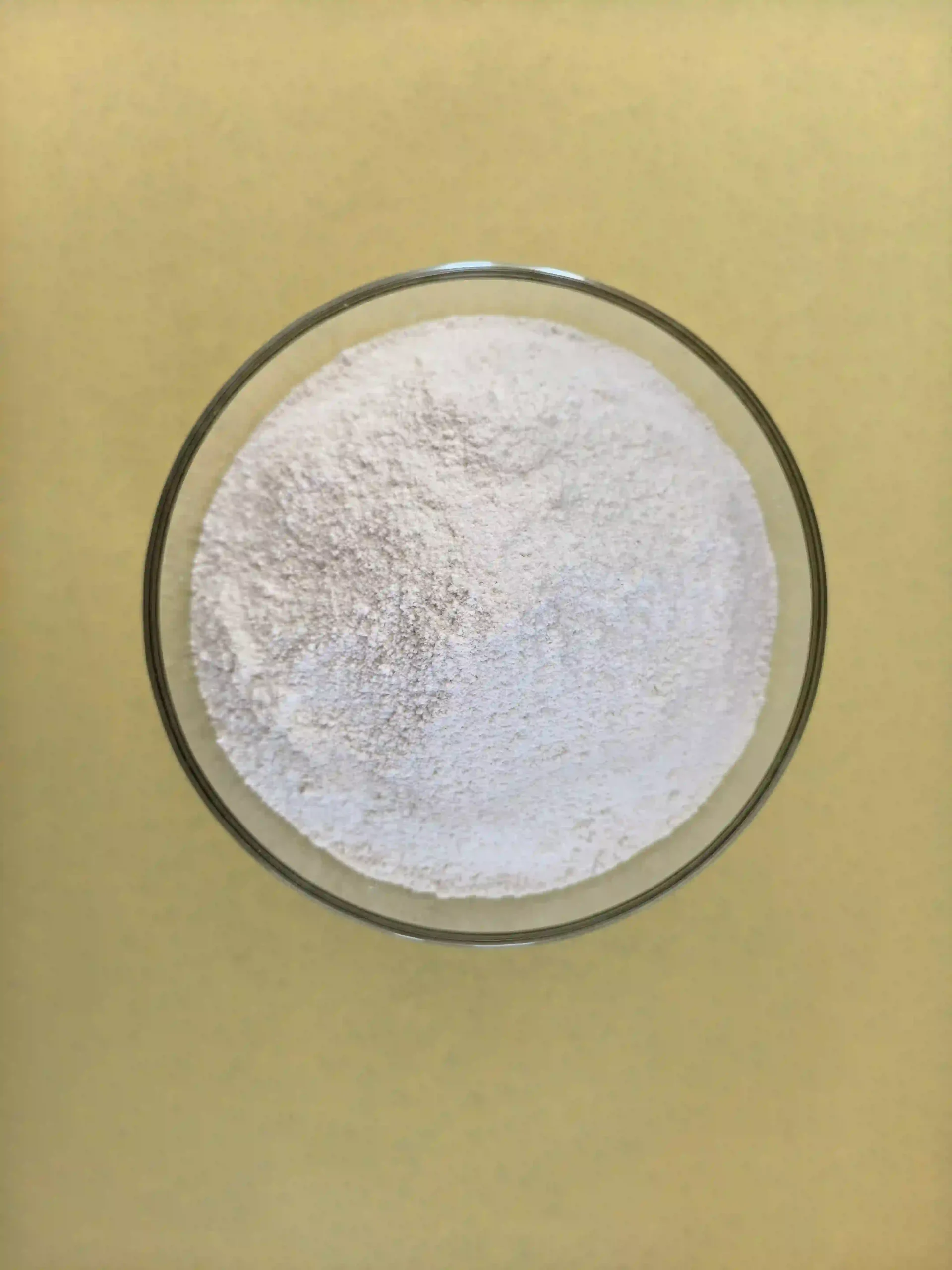
Hydrogen sulfide (H₂S) is continuously generated under anaerobic conditions in slurry pits, underground manure trenches and manure collection tanks of large-scale pig farms. Being denser than air, this gas tends to accumulate in low-lying areas of pig pens. It not only damages the respiratory tracts of pigs and reduces production performance, but also poses a fatal poisoning risk to on-site workers. Featuring high reactivity and large specific surface area, activated zinc oxide stands out as a preferred material for efficient hydrogen sulfide removal at ambient temperatures in pig farms.
When hydrogen sulfide gas comes into contact with activated zinc oxide, a rapid chemical reaction takes place. Toxic gaseous hydrogen sulfide is converted into stable solid zinc sulfide, fundamentally eliminating volatile gas pollution without secondary waste gas emissions.
Unlike conventional feed-grade and indirect-process zinc oxide, activated zinc oxide is modified via special processes to feature a porous, loose structure, ultra-large specific surface area and abundant surface active sites. It overcomes the drawbacks of ordinary zinc oxide such as slow reaction rate and weak adsorption capacity at room temperature. Even under the complex conditions of pig farms with ambient temperature, high humidity and numerous impurities, it can efficiently capture and immobilize hydrogen sulfide, making it a functional zinc material tailored for terminal deodorization in the breeding industry.
A key industry misconception needs to be clarified: orally administered zinc oxide in feed cannot remove hydrogen sulfide in pig houses. Feed-grade zinc oxide functions to relieve diarrhea in weaned piglets in the intestinal tract, and its activity drops sharply after being excreted with manure, losing deodorization capacity. Only externally applied solid activated zinc oxide, which directly contacts hydrogen sulfide gas, can deliver desulfurization and deodorization effects.
The core advantage of activated zinc oxide lies in its outstanding reactivity at normal pig-house temperatures, with a desulfurization rate far higher than that of ordinary zinc oxide. No heating equipment is required, enabling round-the-clock application. Water vapor, ammonia and carbon dioxide inside pig pens compete for adsorption sites, which causes conventional desulfurization materials to fail rapidly. In contrast, activated zinc oxide boasts stable structure and high reaction selectivity, and is barely affected by environmental impurities. It maintains steady desulfurization performance and long service life in humid, multi-gas mixed environments of pig farms. Meanwhile, as an external deodorant, activated zinc oxide will not irritate the respiratory tracts of pigs or disturb their rest and growth, complying with green and environmental protection requirements.
There are three major application modes for hydrogen sulfide removal using activated zinc oxide:
- Spraying beneath manure trenches and slatted floors
Activated zinc oxide is formulated into an aqueous dispersion emulsion and uniformly sprayed onto hydrogen sulfide-emitting zones including the underside of slatted floors, inner walls of manure trenches and gaps at the bottom of pens using low-pressure atomization equipment. After the emulsion dries, a dense functional film of activated zinc oxide forms. When hydrogen sulfide produced by anaerobic fermentation of manure volatilizes upward, it reacts directly with the functional film and is immobilized, blocking odor diffusion at the source. This method features convenient construction without disrupting normal pig rearing, and a single spray delivers long-lasting efficacy, serving as the most cost-effective solution for pig farms at present.
- Surface odor suppression for manure collection tanks and sewage pools
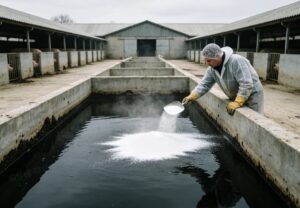
For sealed manure collection and storage tanks in pig farms, ultrafine powdered activated zinc oxide can be evenly spread in appropriate amounts to cover the liquid surface. It can capture hydrogen sulfide volatilized from water bodies to curb odor escape, and moderately inhibit excessive fermentation of surface anaerobic bacteria to reduce continuous hydrogen sulfide generation, effectively mitigating foul odor and mosquito breeding around manure tanks.
- Adsorption filtration in exhaust systems (especially for large-scale pig farms)
Large pig farms can load activated zinc oxide onto honeycomb carriers, ceramsite or filter cotton to fabricate dedicated desulfurization filter modules, which are installed at the terminals of negative-pressure fans and exhaust ducts. Waste gas discharged from pig pens is forced to pass through the filter modules, where hydrogen sulfide is fully adsorbed and immobilized. This greatly reduces odor concentration in exhaust gas and prevents environmental complaints.
Compared with traditional materials such as ordinary zinc oxide, biological deodorants and activated carbon, activated zinc oxide is the most suitable functional material for ambient-temperature hydrogen sulfide removal in pig farms. Benefiting from its core strengths, including large specific surface area, high reactivity, strong anti-interference property and long-term stability, it can efficiently immobilize hydrogen sulfide in pig houses, improve breeding environments, lower disease incidence and resolve odor-related environmental issues.