
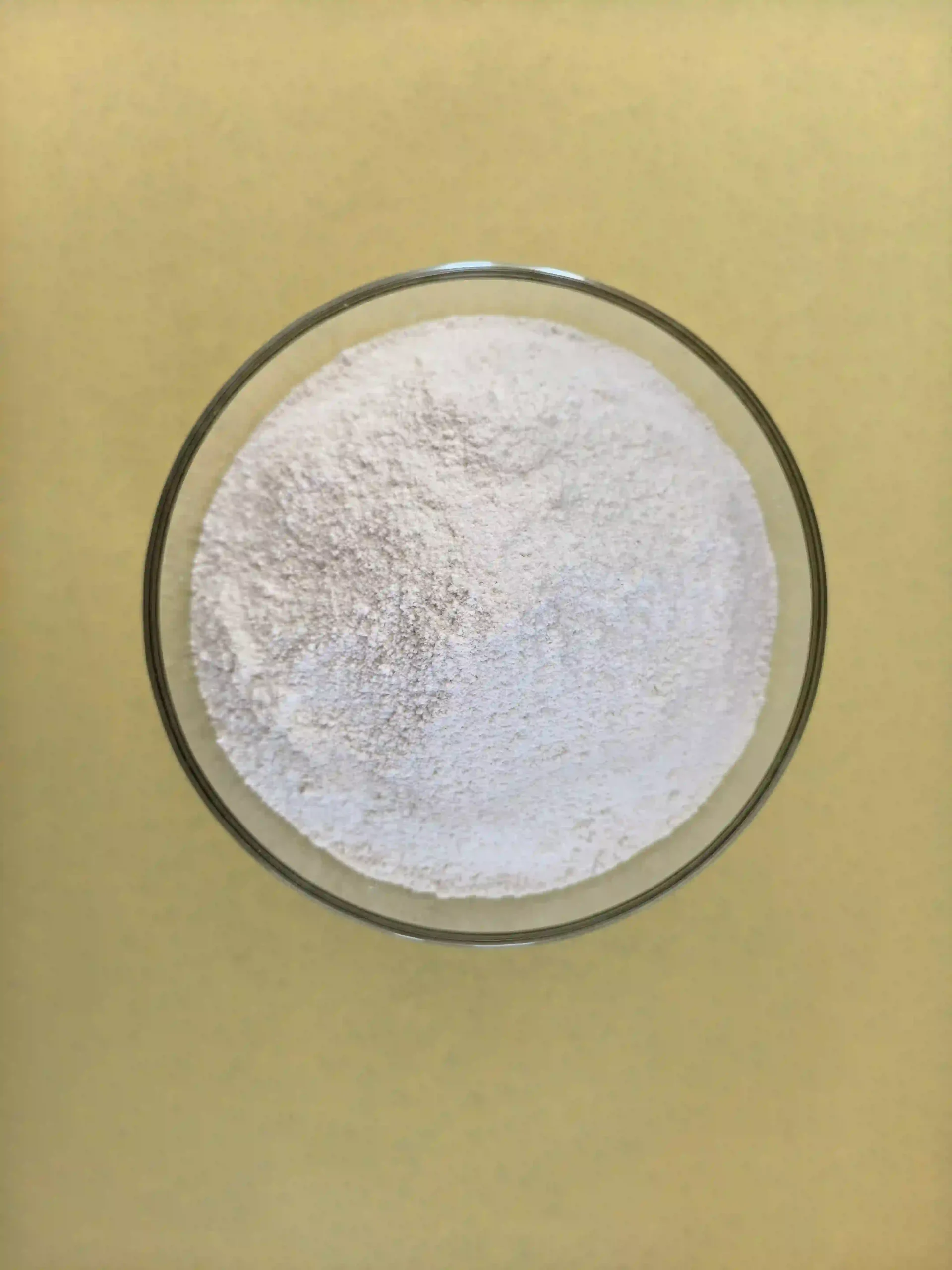
Zinc oxide serves as a core functional additive in sulfur vulcanization systems for rubber. It undertakes critical roles including vulcanization activation, crosslinking regulation, and thermal stability. Its activation degree and dispersion state directly determine the vulcanization efficiency, crosslinking uniformity, mechanical properties and aging resistance of rubber compounds. In practical rubber manufacturing, many common defects such as uneven vulcanization, inferior physical properties, rapid aging degradation and large batch-to-batch performance fluctuation are often not caused by flawed formula ratios. Instead, crude mixing processes lead to poor dispersion of zinc oxide powder and insufficient interfacial activation. A large portion of zinc oxide remains trapped inside the rubber compound as inert particles and fails to deliver its intended functions. Optimizing the mixing process with refinement and standardization can fully unlock the activity of zinc oxide, stabilize the crosslink network of rubber compounds, and improve the overall quality and production stability of rubber materials in a cost-effective and high-efficiency manner.
The core value of zinc oxide within rubber systems lies in three aspects: interfacial activation, crosslinking control and long-term stability. During mixing, zinc oxide reacts with stearic acid to produce zinc stearate with excellent rubber affinity. This breaks the interfacial barrier between inorganic powder and the organic rubber matrix, reduces surface tension, enables uniform wetting of zinc oxide throughout the compound, and drastically cuts the activation energy of vulcanization reactions to efficiently activate vulcanization accelerators and boost overall vulcanization efficiency. At the vulcanization stage, zinc ions form active complex intermediates with sulfur and accelerators, governing the cleavage and recombination of sulfur bonds. This helps raise the proportion of more stable monosulfide and disulfide bonds, optimizes the crosslink structure of rubber, and improves rubber strength and fatigue resistance. In addition, well-dispersed zinc oxide neutralizes acidic impurities inside the compound, suppresses thermo-oxidative degradation of rubber molecular chains, effectively enhances the heat resistance and anti-aging performance of finished products, and extends service life.
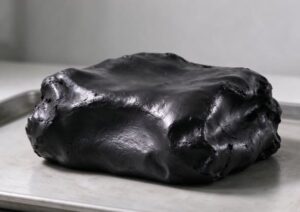
A prevalent issue in production is that zinc oxide is fully dosed yet delivers inadequate performance, which mostly stems from inadequate process control. Zinc oxide powder features fine particle size and high surface energy. It readily absorbs moisture from the air and forms agglomerates. The shear force generated by conventional mixing can hardly break down micro-agglomerates completely, leaving inert particles inside the rubber. These particles cannot participate in interfacial reactions or vulcanization activation, and also trigger local stress concentration. Meanwhile, improper feeding sequences disrupt the activation system of zinc oxide. Misordered addition of stearic acid, liquid softeners and inorganic fillers directly hinders the formation of zinc stearate. Even if zinc oxide is well dispersed, its vulcanization activation effect cannot be achieved. Especially in formulations containing silica and silane coupling agents, disordered feeding may induce side reactions and impair both filler dispersion and zinc oxide activation. Mismatched mixing temperature and shear parameters also cause performance loss. Insufficient mixing temperature results in inadequate plasticization of raw rubber and impedes powder wetting and diffusion. Excessively high temperature leads to stearic acid volatilization and additive decomposition, bringing about premature scorch of rubber compounds and preventing full activation of zinc oxide. Besides, an imbalanced ratio between zinc oxide and stearic acid, as well as insufficient shear force from equipment, further aggravates insufficient activation and uneven dispersion of zinc oxide.
The core strategy to maximize zinc oxide performance is to eliminate powder agglomeration, establish effective interfacial reactions, precisely match temperature zones and shear force, and standardize feeding rhythm. This transforms zinc oxide incorporation from simple physical blending into sufficient interfacial chemical activation. Powder pre-treatment shall be implemented before production. For moisture-caked zinc oxide, crushing and screening through an 80–100 mesh sieve is required. Under high-humidity production environments, low-temperature drying at 60–80°C can remove adsorbed surface moisture to reduce agglomerated white spots at the source. For high-end production scenarios, high-activity zinc oxide can be selected to further improve activation efficiency and achieve dosage reduction with enhanced performance. The feeding procedure must follow a standardized sequence: full plasticization of raw rubber, pre-mixing of stearic acid, batch feeding of zinc oxide, inorganic fillers, liquid softeners, and addition of the vulcanization system at low temperature. Adding stearic acid first creates a uniform reaction environment. Once zinc oxide is introduced, zinc stearate forms rapidly to maximize powder activity. Synchronous feeding of zinc oxide with vulcanizing agents and accelerators is strictly prohibited to avoid premature scorch induced by excessive local concentration. For silica-containing formulations, silica silanization coupling reaction is recommended to be completed prior to zinc oxide feeding, so as to reduce side reactions between zinc oxide and silane that consume coupling agents.
Refined control with segmented temperature regulation and matched shear force is adopted throughout the mixing cycle. At the plasticization stage, temperature is maintained at 70–85°C with low-speed operation to ensure thorough plasticization of raw rubber and form a homogeneous continuous rubber matrix, providing favorable rheological conditions for powder wetting. In the activation and dispersion phase after zinc oxide feeding, temperature is stabilized at 85–95°C with moderately increased shear force to create suitable conditions for the complexation reaction between stearic acid and zinc oxide, while breaking micro-agglomerated particles. The pure mixing duration for this stage shall be no less than 90 seconds to reserve sufficient time for interfacial reaction and dispersion. In the homogenization phase at the later mixing stage, temperature is controlled below 110°C to avoid premature scorch and pre-reaction of accelerators. After dumping, 3–5 passes of tight milling are applied to further eliminate local concentration gradients and improve overall uniformity. Instead of traditional one-time bulk feeding, powder is added in small, repeated portions at a steady rate, allowing powder to be gradually wrapped and wetted by rubber and preventing uneven vulcanization caused by local zinc oxide accumulation and incomplete reaction.
Process optimization must be coordinated with formula design and standardized quality control to maximize zinc oxide efficiency. In conventional rubber formulations, the common phr ratio of zinc oxide to stearic acid ranges from 4:1 to 5:1. This empirical production range guarantees sufficient zinc stearate generation, reduces residual free acid and prevents zinc oxide waste. For highly filled rubber compounds, the ratio can be slightly adjusted according to system requirements. Active zinc oxide with reduced loading can be used for transparent thin-wall products to balance mechanical performance and appearance quality. Daily production quality control focuses on uniform compound dispersion, stable vulcanization and consistent performance. Optimized rubber compounds should be free of white spots and particulate impurities, with smooth vulcanization curves, uniform crosslink density, markedly improved mechanical properties and aging retention rate, plus drastically reduced batch-to-batch variation. Meanwhile, standardized operating procedures shall be fixed with unified pre-treatment, feeding, temperature control and mixing parameters. Equipment shall be inspected regularly and shear parameters calibrated to avoid insufficient shear force due to equipment aging, ensuring sustained and stable release of zinc oxide performance.
In summary, the performance ceiling of zinc oxide in rubber compounds does not depend on its feeding dosage, but on refined matching of the mixing process. Traditional crude mixing modes lead to massive underutilization of zinc oxide activity and performance waste, restricting the improvement of rubber quality. Powder pre-treatment eliminates inherent defects, optimized feeding sequences build high-efficiency activation systems, segmented temperature and shear control match reaction demands, formula coordination is optimized, and full-process quality control provides safeguards. These measures resolve pain points including poor zinc oxide dispersion, insufficient activation and low utilization efficiency. Without increasing raw material and production costs, the core functions of zinc oxide in vulcanization activation, crosslinking regulation and thermal stabilization can be fully leveraged. This effectively improves the quality uniformity and service life of rubber products, achieving multiple goals of quality upgrading, efficiency gain and cost reduction in rubber manufacturing.