
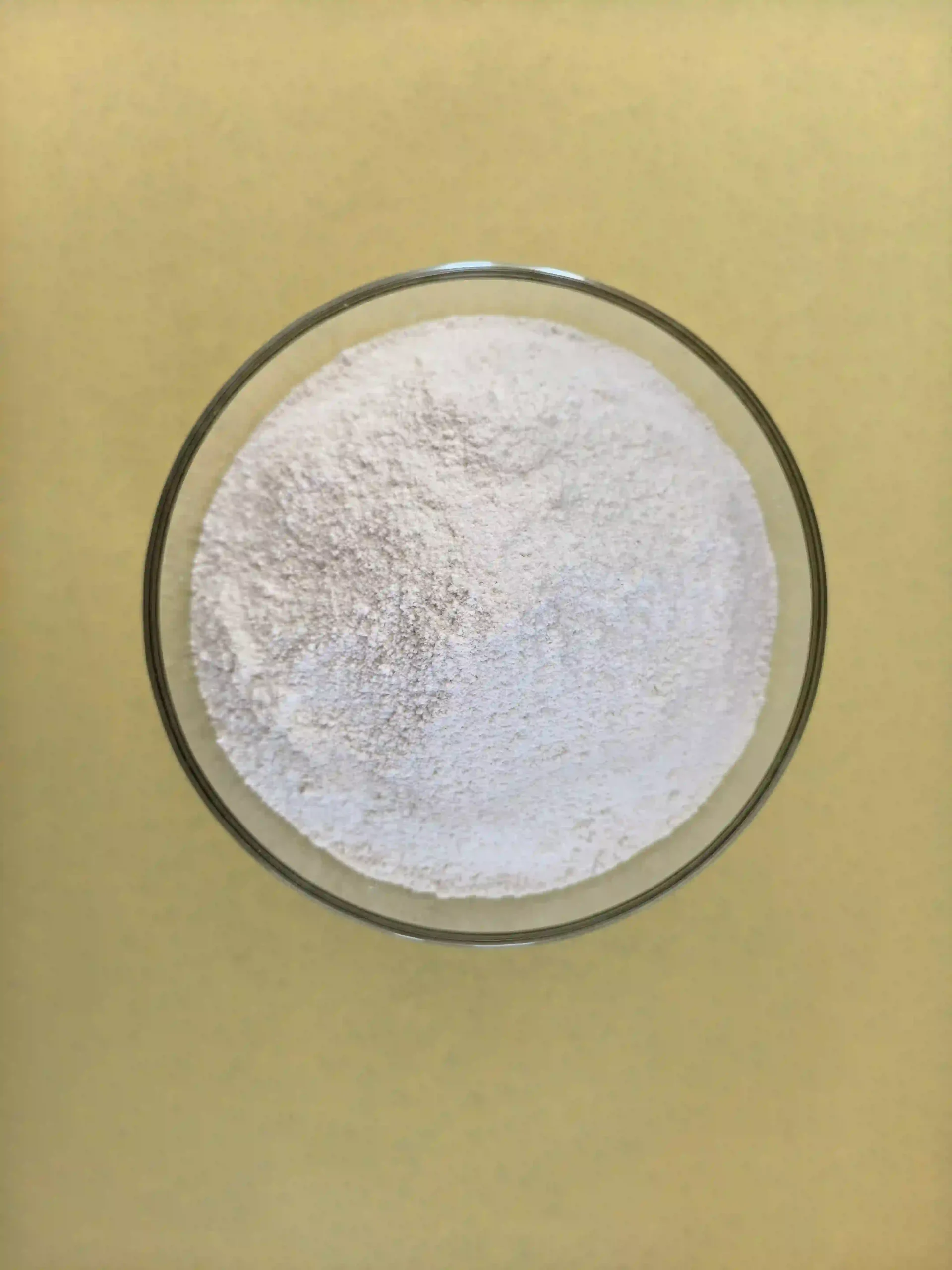
In the vast chemical industry, some chemicals are considered to be superstars; their primary use is in large quantities. Others are still unsungheroes, who serve as backups in complex endeavors where their specific role is not only beneficial, but it’s crucial. Zinc Sulfate (ZnSO₄) is classified into this latter category as well.
While thousands of tons of Zinc Sulfate are employed around the world in agriculture and animal feed, the chemical’s role in specialized industries like mining and synthetic fiber production is where its true effectiveness and chemical beauty are exhibited. For a metallurgical engineer in a flotation plant or a process engineer in a rayon facility, Zinc Sulfate isn’t considered just a chemical in the inventory list, but rather a complex process enhancer that enables the separation of substances and controls the formation of substances.
Many purchasing managers may recognize “Zinc Sulfate” on a requisition form and simply procure it like other bulk goods. This is a crucial error. Understanding the specific reason for this chemical’s inclusion, as well as the processes that utilize it, is crucial to finding the appropriate grade, maintaining efficiency in the operation of the entire plant, and ultimately, protecting the profitability of the entire plant.
The Art of Separation – Zinc Sulfate as a Depressant in Froth Flotation
The procedure of flotation by froth is one of the greatest metallurgical feats. It’s a beautifully intricate dance of chemistry and physics that facilitates the distinction between valuable minerals and worthless rock, or, more impressively, between different valuable minerals. This is particularly true of polymetallic ores; minerals like lead, copper, and zinc are often found together in intimate association.
Imagine you have a complex mineral that contains both galena (lead sulfide, PbS) and sphalerite (zinc sulfide, ZnS). Both are important, but they must be separated into a “lead core” and a “zinc core.” The difficulty is that both minerals have a natural propensity to buoy under similar conditions. If you simply add a merchant and attempt to float them, you will get a blended, low-power concentrate that is commercially unsuccessful.
This is the location of Zinc Sulfate’s primary role as a depressant.
What Does a “Depressant” Do?
In the context of flotation, a depressant is a chemical reagent that selectively prevents a specific mineral from attaching to air bubbles and floating, while allowing other minerals to float freely. It essentially tells one mineral to “sit down and wait” while another is recovered.
In the case of separating lead-zinc or copper-zinc ores, Zinc Sulfate is the industry-standard depressant for sphalerite (the zinc mineral).
The Mechanism: How Zinc Sulfate “Blinds” the Zinc Mineral
The process is a masterpiece of surface chemistry. Here’s a simplified, practical explanation:
- Creating the Right Environment: The flotation pulp (a mixture of ground ore and water) is first conditioned at an alkaline pH, often using lime or soda ash. This is a critical first step.
- Adding the Depressant: Zinc Sulfate is then added to the pulp. In the alkaline environment, the zinc ions (Zn²⁺) from the dissolved Zinc Sulfate react to form hydrophilic (water-loving) species, such as zinc hydroxide [Zn(OH)₂] and hydroxyzinc ions [Zn(OH)⁺].
- Selective Adsorption: These hydrophilic zinc species have a strong chemical affinity for the surface of the sphalerite (ZnS) mineral particles. They adsorb onto the sphalerite surface, effectively coating it in a water-loving layer.
- “Blinding” the Collector: Now, when the collector—the chemical designed to make minerals water-hating (hydrophobic) so they can attach to air bubbles—is added, it finds the surface of the sphalerite is already occupied by the hydrophilic zinc species. The sphalerite has been “blinded” or “deactivated.” It cannot become hydrophobic and therefore cannot float.
- Selective Flotation: Meanwhile, the surface of the galena (PbS) or chalcopyrite (CuS) is unaffected by the Zinc Sulfate. It readily adsorbs the collector, becomes hydrophobic, attaches to air bubbles, and floats to the surface, where it is collected as a high-grade lead or copper concentrate.
- Reactivation (The Second Act): After the lead or copper has been removed, the remaining pulp, which contains the depressed sphalerite, is sent to a separate flotation circuit. Here, an “activator,” most commonly copper sulfate, is added. The copper ions displace the zinc hydroxide layer from the sphalerite surface, “reactivating” it. A collector is then added, and the now-hydrophobic sphalerite is floated to produce a high-grade zinc concentrate.
This selective depression and subsequent activation, orchestrated by Zinc Sulfate, is the cornerstone of differential flotation for most of the world’s complex sulfide ores.
Why Quality Matters: The Impact of Impurities
For a metallurgical engineer, the consistency of their reagents is paramount. A flotation circuit is a finely balanced system, and any unexpected variable can throw it into chaos, leading to poor mineral recovery and significant financial loss. When sourcing Zinc Sulfate for this application, purity is not a luxury; it’s a necessity.
- Purity (Assay): A lower-than-specified ZnSO₄ content means you have to dose more product to achieve the same depressing effect, leading to inaccurate process control and higher consumption costs.
- Insoluble Matter: High levels of insoluble material can interfere with the surface chemistry and introduce “slimes” into the circuit, which are known to be detrimental to flotation performance.
- Metallic Impurities: Contaminants like iron or manganese can sometimes have unintended activating or depressing effects on other minerals in the pulp, disrupting the delicate selectivity of the separation.
As a result, obtaining a high-purity, consistent composition of Zinc Sulfate is essential to maintaining a stable and effective flotation process. It guarantees that the “blinding” effect will be consistent and powerful, batch after batch, maximizing the yield and quality of the final mineral concentrates.
The Art of Formation – Zinc Sulfate in Rayon Manufacturing
Let’s transition from the harsh world of mining to the delicate and complex world of synthetic fiber production. Here, Zinc Sulfate has a critical role that is similar to that of Paraphrase the text in English: Rayon is also known as viscose, and is made from a mixture of cotton and polyester fabric.
Rayon is a fiber that is partially synthetic and is derived from cellulose that is regenerated, which is typically done from wood pulp. The “viscose process” involves converting this pulp into a thick, honey-like substance called viscose solution. The magic occurs during the following step: wetting. This is the location of the liquid viscous that is converted into a solid fiber.
The Spinning Bath: A Cauldron of Transformation
The viscose solution is expelled through a device called a spinneret, which resembles a small waterfall with thousands of microscopic openings. This is directly into a chemical solution called a spinning bath or coagulation bath.
This bath is primarily composed of chemicals that have a high acidity level and are carefully balanced, among them are sulfuric acid, sodium sulfate, and Zinc Sulfate.
As the liquid viscose flows into this bath, a rapid succession of chemical reactions occurs. The acidic sulfuric solution will neutralize the base-rich solution; this will cause the dissolved cellulose to be regenerated and to form solid strands. The sodium sulfate facilitates the evaporation of the water in the fibers. However, it’s the Zinc Sulfate that functions as the chief executive of this conversion.
The Role of Zinc Sulfate: A “Retarder” and “Structure-Former”
Without Zinc Sulfate, the regeneration of cellulose would be almost instantaneous and uncontrolled. This would result in a weak, brittle fiber with a rough, irregular cross-section (a “skin-core” effect) and poor physical properties.
Zinc Sulfate functions as a regeneration retarder. Here’s how it works:
- Forming an Intermediate Compound: As the viscose enters the bath, the zinc ions (Zn²⁺) from the dissolved Zinc Sulfate react first with the cellulose xanthate (the chemical form of cellulose in the viscose solution). They form an intermediate compound, zinc cellulose xanthate.
- Slowing Down Decomposition: This zinc cellulose xanthate is more stable and decomposes much more slowly in the acid bath than the original sodium cellulose xanthate. It acts as a temporary “brake” on the regeneration process.
- Promoting Uniform Formation: By slowing everything down, the Zinc Sulfate allows the acid to penetrate the nascent filament more uniformly before the cellulose fully solidifies. This results in a more homogenous, “all-core” fiber structure.
- Enhancing Physical Properties: This controlled, uniform regeneration process is directly responsible for improving the final rayon fiber’s key characteristics:
- Higher Tenacity (Strength): The more uniform structure is stronger and more resilient.
- Improved Elongation: The fiber has better stretch and flexibility without breaking.
- Reduced Crimping/Serration: The cross-section of the fiber is rounder and less serrated, leading to a softer feel and better dyeing properties.
In general, Zinc Sulfate functions as a “molecular planner,” it directs the liquid cellulose solution towards a solid state that possesses a well-developed, efficient fiber. The concentration of Zinc Sulfate in the bath that’s used for spinning is critical to the production of different types of rayon with specific properties.
The Purity Imperative in Fiber Production
Just as in mining, the quality of the Zinc Sulfate used in rayon production is of paramount importance. The spinning process is incredibly sensitive to contaminants.
- Iron (Fe): Iron impurities can cause discoloration (yellowing) in the final white fiber and can act as a catalyst for oxidative degradation, weakening the fiber.
- Manganese (Mn): Manganese is another problematic impurity that can affect the stability of the viscose solution and the color of the final product.
- Insoluble Matter: Any solid particles in the Zinc Sulfate solution can clog the microscopic holes of the spinneret, leading to filament breaks, production downtime, and costly maintenance.
For this reason, rayon manufacturers almost exclusively use a high-purity, technical-grade Zinc Sulfate with strictly controlled low levels of iron, manganese, and other contaminants. Sourcing a reliable supply that meets these stringent specifications is absolutely essential for producing high-quality rayon fiber consistently.
A Small Input with a Monumental Impact
From the dusty, dynamic environment of a mineral processing plant to the chemically precise world of a fiber factory, Zinc Sulfate demonstrates its remarkable versatility.
- In mining, it is the key that unlocks complex ores, enabling the selective separation of valuable minerals by “blinding” zinc sulfide, directly impacting the profitability and efficiency of the entire operation.
- In rayon manufacturing, it is the master controller of fiber formation, retarding the regeneration process to build a stronger, more uniform, and higher-quality fiber from a liquid precursor.
While the applications are different, the underlying requirement is the same: a high-purity, consistent, and dependable product. The function of Zinc Sulfate in these fields is a powerful example of the importance of chemistry in industrial settings; the most crucial components are not necessarily those that are used in the greatest quantities. Often, it’s the exact, targeted behavior of a specialized agent that enables the entire process.
Any professional who is involved in purchasing these industries must understand the critical importance of this role. It changes the process of buying Zinc Sulfate from a simple transaction into a strategic decision that directly supports the stability of the process, the quality of the product, and the ultimate success of the enterprise.