
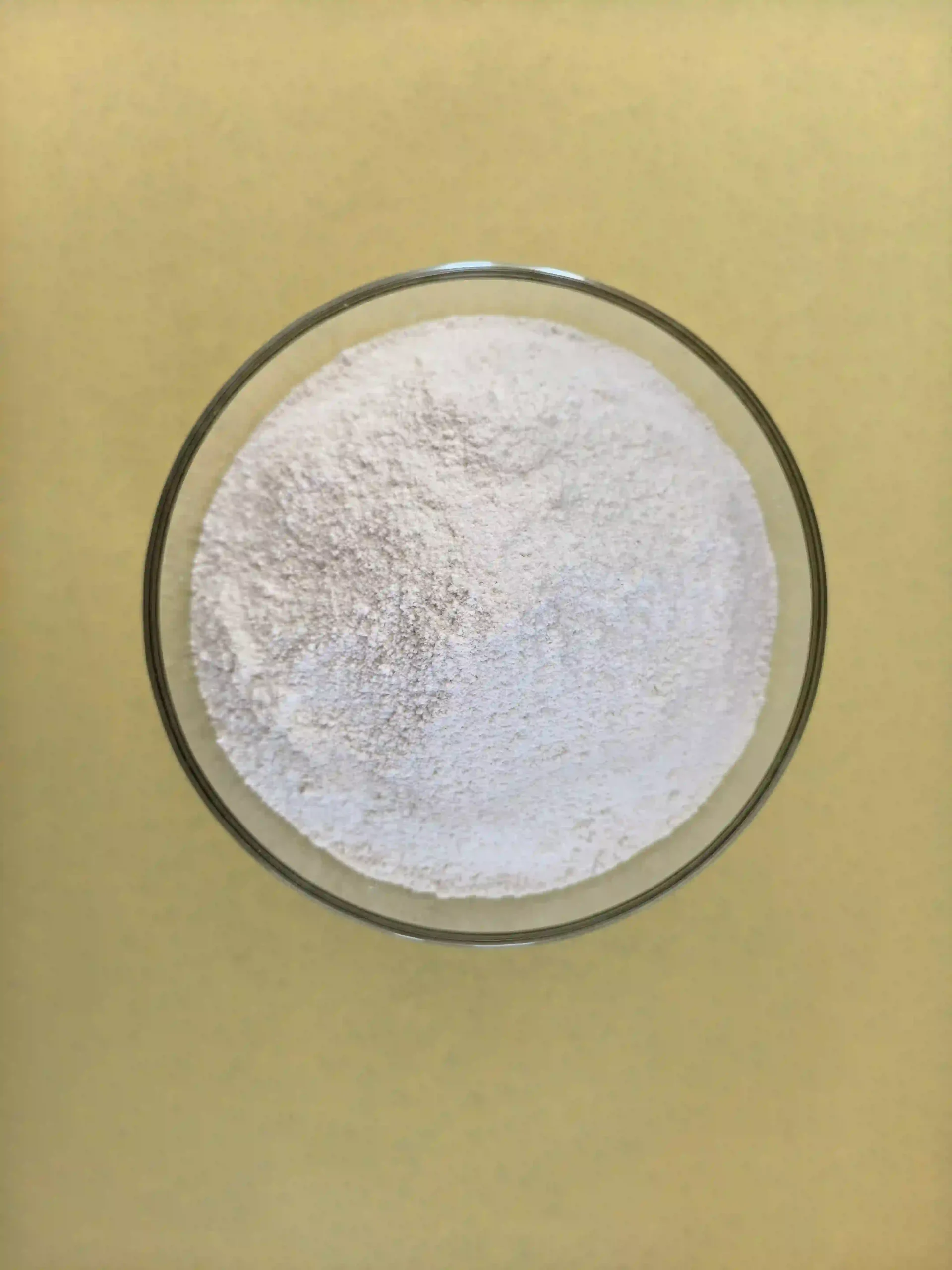
Active Zinc Oxide Nano Grade represents a breakthrough in material science, featuring particle sizes below 100nm that deliver enhanced reactivity, UV absorption, and antimicrobial properties. This informational guide explores the fundamental characteristics, technical specifications, and industrial applications of nano-grade zinc oxide, providing procurement professionals and engineers with critical insights for material selection and integration. Unlike conventional zinc oxide powders, nano-grade variants exhibit quantum-scale effects that dramatically improve performance in rubber vulcanization, cosmetic formulations, and electronic components. Understanding these advanced properties enables manufacturers to optimize product formulations while meeting stringent regulatory requirements across global markets.
Active Zinc Oxide Nano Grade Technology
Particle Size and Surface Area Characteristics
The classification of Active Zinc Oxide Nano Grade hinges on particle dimensions ranging from 10 to 100 nanometers, placing these materials firmly within the nanoscale regime where quantum mechanical effects begin to dominate. This size reduction creates an exponential increase in surface-area-to-volume ratio—nano zinc oxide typically exhibits specific surface areas between 30-60 m²/g compared to 5-10 m²/g for standard grades. This geometric transformation translates directly into commercial advantages: higher catalytic efficiency, improved dispersion stability, and enhanced interfacial bonding in composite materials.
Quantum confinement effects emerge when particle dimensions approach the exciton Bohr radius (approximately 2.34 nm for ZnO). While most commercial nano-grades exceed this threshold, particles in the 10-30nm range still demonstrate blue-shifted optical absorption and modified electronic band structures. These properties prove critical in applications requiring precise UV filtering or photocatalytic activity. The increased surface energy also makes nano zinc oxide more chemically reactive—a double-edged characteristic that demands careful surface treatment to prevent unwanted aggregation during storage and processing.
Manufacturing processes significantly influence final particle morphology. Flame spray pyrolysis produces spherical particles with narrow size distributions, while wet chemical precipitation methods yield rod-like or flower-shaped aggregates. For procurement teams, understanding these morphological differences proves essential: spherical particles offer superior flow properties in powder coating applications, while high-aspect-ratio structures provide better reinforcement in polymer matrices.
Chemical Composition and Crystal Structure
Active Zinc Oxide Nano Grade maintains the wurtzite hexagonal crystal structure characteristic of bulk ZnO, with lattice parameters a = 3.25 Å and c = 5.21 Å. This non-centrosymmetric structure generates inherent piezoelectric and pyroelectric properties exploited in sensor applications. Purity standards for industrial nano-grades typically specify a minimum 99.5% ZnO content, with residual impurities carefully controlled to prevent performance degradation. Lead content must remain below 10 ppm for cosmetic applications, while electronic-grade materials demand even stricter specifications.
Strategic doping transforms baseline zinc oxide into application-specific variants. Aluminum-doped ZnO (AZO) exhibits enhanced electrical conductivity (10⁻⁴ to 10⁻³ Ω·cm) suitable for transparent electrodes. Manganese or cobalt doping introduces magnetic properties for spintronics research. For antimicrobial applications, silver-doped nano zinc oxide combines the inherent bactericidal activity of both components, achieving log-reduction values exceeding 5 for common pathogens at concentrations below 1% w/w.
Surface modification represents another critical specification dimension. Untreated nano zinc oxide surfaces carry hydroxyl groups that promote water absorption and particle agglomeration. Hydrophobic treatments using silanes, stearic acid, or polymeric dispersants improve compatibility with organic matrices. Procurement specifications should explicitly define surface treatment type, as this dramatically affects dispersion stability, optical clarity, and processing behavior in final applications.
Key Technical Properties and Performance Metrics
Optical and UV Absorption Capabilities
The direct bandgap energy of 3.37 eV positions zinc oxide as an exceptional UV absorber, with maximum absorption efficiency occurring at 368 nm. Nano-grade materials demonstrate superior UV-blocking performance across the critical UVA (315-400 nm) and UVB (280-315 nm) ranges while maintaining transparency in the visible spectrum (400-700 nm). This optical selectivity makes Active Zinc Oxide Nano Grade the preferred choice for broad-spectrum sunscreen formulations, where SPF values of 30-50 can be achieved at loading levels of 15-25% w/w.
Particle size critically influences optical performance through light scattering mechanisms. Materials in the 30-50 nm range minimize visible light scattering while maximizing UV absorption—a balance essential for cosmetically elegant formulations. Larger particles (80-100 nm) provide enhanced coverage but may impart whitening effects undesirable in personal care products. Advanced surface treatments using alumina or silica coatings further optimize the refractive index matching, reducing visible opacity by 20-30% without compromising UV protection.
Photostability testing reveals nano zinc oxide maintains absorption characteristics after 500+ hours of accelerated UV exposure, outperforming organic UV filters that degrade under identical conditions. This durability translates to extended product shelf life and sustained protection in outdoor coating applications where weathering resistance determines long-term performance.
Antimicrobial and Catalytic Activity
The antimicrobial mechanism of Active Zinc Oxide Nano Grade operates through multiple pathways: reactive oxygen species (ROS) generation, zinc ion release, and direct membrane disruption. Under ambient or UV-activated conditions, surface defects and oxygen vacancies catalyze the formation of hydroxyl radicals (•OH), superoxide anions (O₂⁻), and hydrogen peroxide (H₂O₂). These oxidative species attack bacterial cell membranes, denature proteins, and damage DNA structures. Independent testing demonstrates 99.9% reduction of Escherichia coli and Staphylococcus aureus populations within 2-4 hours at concentrations as low as 0.5 mg/mL.
Photocatalytic degradation of organic pollutants represents another commercial advantage. Nano zinc oxide efficiently breaks down volatile organic compounds (VOCs), textile dyes, and pharmaceutical residues under UV or visible light irradiation. Degradation rates for methylene blue—a standard test molecule—exceed 90% within 120 minutes at catalyst loadings of 1 g/L. This property finds application in self-cleaning coatings, water treatment systems, and air purification technologies.
The catalytic activity correlates directly with specific surface area and defect density. Materials with higher oxygen vacancy concentrations demonstrate enhanced ROS generation but may exhibit reduced stability in acidic environments. Procurement teams must balance activity requirements against application-specific pH conditions and expected service life.
[Table Placeholder: Nano ZnO vs. Standard ZnO Property Comparison]
| Property Dimension | Nano ZnO (30-50nm) | Standard ZnO (200-500nm) | Performance Advantage |
|---|---|---|---|
| Specific Surface Area | 40-60 m²/g | 5-10 m²/g | 5-8× increase |
| UV Absorption (360nm) | 95-98% | 75-85% | +15-20% efficiency |
| Antibacterial Efficacy | 99.9% in 2h | 90-95% in 6h | 3× faster kill rate |
| Catalytic Activity | 90% degradation/2h | 60% degradation/2h | 50% improvement |
| Transparency (visible) | >85% at 20% loading | <60% at 20% loading | Superior clarity |
Industrial Applications Across Sectors
Rubber and Plastics Industry
In rubber compounding, Active Zinc Oxide Nano Grade functions as a critical vulcanization activator, forming zinc-accelerator complexes that catalyze sulfur crosslinking reactions. The nano-scale particle size enables more efficient dispersion throughout the elastomer matrix, reducing required dosage from conventional 5 phr (parts per hundred rubber) to 3-4 phr while maintaining equivalent or superior cure rates. This reduction directly lowers material costs and minimizes zinc environmental impact—a growing regulatory concern in automotive and consumer goods manufacturing.
Thermal stability enhancement represents another key benefit. Nano zinc oxide particles act as heat sinks and radical scavengers, extending the service temperature range of vulcanized rubber by 15-20°C. This property proves essential in high-performance applications such as tire inner liners, industrial conveyor belts, and aerospace sealing components, where thermal degradation limits component lifespan.
Processing advantages include improved flow characteristics during mixing and reduced scorch time variability. The high surface energy of nanoparticles promotes faster wetting by processing oils and accelerators, shortening mixing cycles by 10-15%. However, careful attention to dispersion methodology is required—high-shear mixing or masterbatch pre-dispersion prevents agglomeration that would negate particle size advantages.
Coatings and Cosmetics
UV-protective sunscreen formulations represent the largest commercial market for cosmetic-grade nano zinc oxide. Regulatory approvals from the FDA, the EU Commission, and other global authorities permit concentrations up to 25% in leave-on products. The combination of broad-spectrum UV blocking, photostability, and non-irritating nature makes nano zinc oxide suitable for sensitive skin formulations and pediatric products where chemical filters face increasing scrutiny.
Antimicrobial paint systems incorporating nano zinc oxide achieve sustained biocidal activity without leaching toxic compounds. Interior coatings for healthcare facilities, food processing plants, and public transportation demonstrate 99%+ reduction in surface bacterial contamination over 24-month service periods. The photocatalytic self-cleaning effect additionally reduces maintenance requirements in exterior architectural applications, with dirt and organic stains breaking down under natural sunlight exposure.
Transparent conductive films for touchscreen displays and photovoltaic applications leverage the electrical properties of doped nano zinc oxide. Aluminum-doped variants achieve sheet resistances below 100 Ω/sq while maintaining >85% visible light transmission—performance competitive with indium tin oxide at significantly lower material cost. Deposition via spray pyrolysis or sputtering creates conformal coatings suitable for flexible electronics and curved display geometries.
Electronics and Energy Storage
Varistor applications exploit the non-linear current-voltage characteristics of zinc oxide grain boundaries. Nano-grade starting materials enable sintering of fine-grained microstructures with higher breakdown voltage uniformity and faster response times. Surge protection devices manufactured from nano zinc oxide demonstrate clamping voltages within ±5% tolerance compared to ±10-15% for conventional materials—critical precision for protecting sensitive semiconductor circuits.
Lithium-ion battery anodes incorporating nano zinc oxide demonstrate theoretical capacities of 987 mAh/g—nearly three times that of conventional graphite. The conversion reaction mechanism (ZnO + 2Li⁺ + 2e⁻ → Zn + Li₂O) provides high energy density, while the nano-scale architecture accommodates volume expansion during cycling. Commercial implementation faces challenges related to first-cycle irreversibility and long-term capacity fade, but ongoing research into carbon-coated and hierarchical structures shows promising results for next-generation energy storage.
Piezoelectric sensors and nanogenerators leverage the wurtzite crystal structure’s inherent charge polarization under mechanical stress. Nano zinc oxide arrays fabricated via hydrothermal growth or electrospinning generate output voltages of 1-10V under dynamic loading, sufficient for self-powered wireless sensor networks and wearable electronics. The biocompatibility of zinc oxide further enables implantable medical devices that harvest energy from body motion.
Regulatory Compliance and Safety Standards
International Quality Certifications
Active Zinc Oxide Nano Grade materials destined for commercial markets must navigate complex regulatory frameworks that vary by application and geography. ISO 9001:2015 certification provides baseline quality management assurance, but nano-specific regulations impose additional requirements. The European Union’s REACH (Registration, Evaluation, Authorization, and Restriction of Chemicals) regulation mandates separate registration for nano-forms of substances, requiring comprehensive toxicological data and exposure assessments.
For cosmetic applications, FDA approval under 21 CFR 352.10 permits nano zinc oxide as an active sunscreen ingredient at concentrations up to 25%. The EU Cosmetics Regulation (EC) No 1223/2009 requires nano-materials to be clearly labeled with “[nano]” designation on product ingredient lists. Manufacturers must demonstrate particle size distribution data, with at least 50% of particles by number falling below 100nm to meet the regulatory definition.
EU Regulation 2018/1881 specifically addresses nanomaterials in food contact applications, establishing migration limits and requiring safety evaluations for particles that could transfer to food products. For rubber and plastics applications in food packaging, nano zinc oxide must comply with these restrictions alongside traditional heavy metal content limits (lead <10 ppm, cadmium <5 ppm).
Occupational safety standards under OSHA and EU workplace directives establish permissible exposure limits (PEL) for zinc oxide dust at 5 mg/m³ (respirable fraction) and 15 mg/m³ (total dust). Nano-grade materials may require additional precautions due to enhanced respiratory deposition efficiency. Proper handling protocols include local exhaust ventilation, personal protective equipment (respirators rated N95 or higher), and engineering controls to minimize dust generation during transfer and mixing operations.
Environmental discharge regulations increasingly address nanomaterial releases. The EPA’s Toxic Substances Control Act (TSCA) requires reporting of nano zinc oxide manufacturing volumes exceeding 10,000 kg/year, with ecological impact assessments for aquatic organisms. Studies indicate nano zinc oxide exhibits higher acute toxicity to aquatic invertebrates compared to bulk forms (LC50 values 0.5-2 mg/L vs. 5-10 mg/L), necessitating careful wastewater management in manufacturing facilities.
Active Zinc Oxide Nano Grade offers superior performance over conventional zinc oxide through enhanced reactivity, UV protection, and antimicrobial properties enabled by nanoscale dimensions and high surface area. Understanding its technical specifications—including particle size distribution, crystal structure, surface treatment, and purity standards—enables informed procurement decisions across rubber manufacturing, coatings, electronics, and healthcare sectors. The material’s versatility spans vulcanization activation at reduced dosages, broad-spectrum UV filtering in cosmetics, antimicrobial functionality in paints, and emerging applications in energy storage and flexible electronics.
Successful integration requires careful attention to dispersion methodology, regulatory compliance, and application-specific property optimization. The comparative advantages over standard zinc oxide—including 5-8× higher surface area, 50% improved catalytic activity, and superior optical transparency—justify premium pricing in performance-critical applications. As regulatory frameworks evolve to address nanomaterial-specific concerns, working with certified suppliers who provide comprehensive documentation ensures compliance across global markets.
Procurement teams should prioritize suppliers offering detailed characterization data (TEM imaging, BET surface area, XRD crystal structure), regulatory certifications appropriate to end-use applications, and technical support for dispersion optimization. The continued development of surface-modified variants and application-specific grades promises expanding opportunities for manufacturers seeking competitive advantages through advanced material science.