
With the rapid advancement of industrialization, pollutants such as heavy metals, organic dyes, and pesticide residues in water and soil are becoming increasingly severe. Traditional adsorbents (such as activated carbon and zeolites) suffer from issues such as low adsorption capacity, poor selectivity, and difficulty in regeneration. Consequently, the development of new, highly efficient, environmentally friendly, and renewable adsorbents has become a hot topic in environmental research.
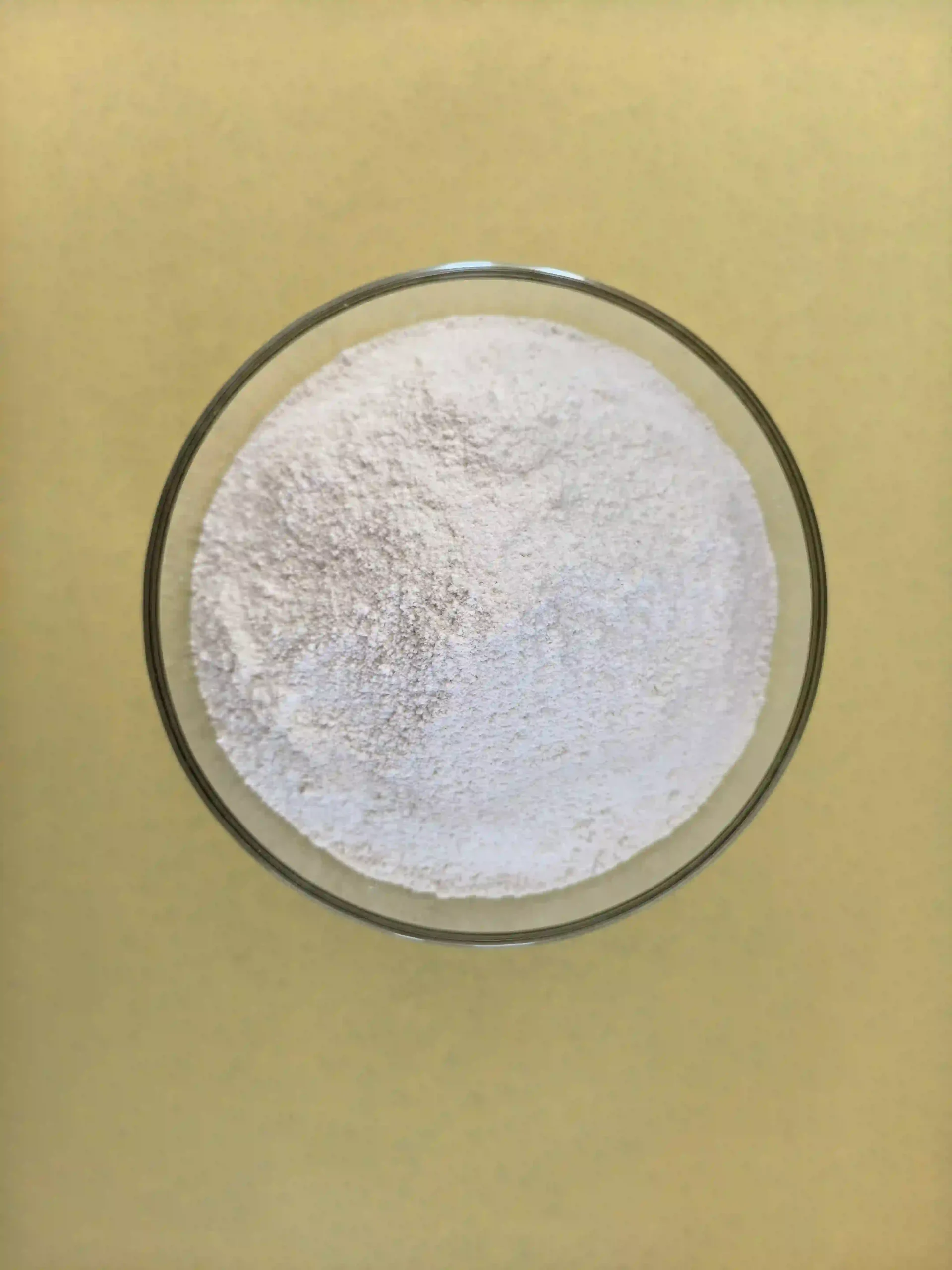
Nano-zinc oxide consists of zinc oxide crystals with particle sizes ranging from 1 to 100 nm. It features a hexagonal zinc blende structure and offers advantages such as surface effects, quantum size effects, and high chemical reactivity. Compared to conventional zinc oxide, the specific surface area of nano-zinc oxide can be increased by tens of times. Its surface is rich in active groups such as hydroxyl (–OH) groups, and its surface charge can be regulated by pH, enabling efficient adsorption of various pollutants. Additionally, its semiconductor properties confer photocatalytic degradation capabilities, allowing for an integrated “adsorption–degradation” process, which holds irreplaceable application value in environmental remediation.
Structural Characteristics and Adsorption Mechanism of Nano-Zinc Oxide
(I) Structural Characteristics
The core advantages of nano-zinc oxide stem from its nanoscale effects:
High specific surface area: The smaller the particle size, the larger the specific surface area. For example, ZnO NPs with a size of 30–50 nm can achieve a specific surface area of 12–50 m²/g, providing ample active sites for adsorption;
Abundant Surface Active Sites: The surface atoms are unsaturated in coordination, with a large number of oxygen vacancies, zinc vacancies, and hydroxyl groups (–Zn–OH), which can form chemical bonds or hydrogen bonds with pollutants;
Tunable Surface Charge: The point of zero charge (PZC) is approximately 9–10. When pH < PZC, the surface carries a positive charge (–Zn–OH₂⁺), adsorbing anionic pollutants; When pH > PZC, the surface carries a negative charge (–Zn–O⁻), adsorbing cationic pollutants;
Photocatalytic synergy: Under UV excitation, electron–hole pairs are generated, producing highly oxidative species such as hydroxyl radicals (・OH), which can degrade adsorbed organic pollutants into CO₂ and H₂O, thereby regenerating the adsorption sites.
(II) Adsorption Mechanism
The adsorption of pollutants by nano-zinc oxide is a synergistic process involving physical adsorption, chemical adsorption, surface complexation, electrostatic interactions, and photocatalytic coupling:
Physical adsorption: Depends on van der Waals forces; pollutant molecules accumulate in single or multiple layers on the ZnO NP surface; highly reversible and dominant at low temperatures;
Chemical adsorption (dominant): Surface hydroxyl groups form chemical bonds with pollutants; for example, heavy metal ions (Cu²⁺, Pb²⁺) form surface complexes (–Zn–O–M) with –OH groups, while organic dyes bind via π-π stacking or hydrogen bonding, conforming to a quasi-second-order kinetic model;
Electrostatic adsorption: Surface charge is regulated by pH, attracting and adsorbing ionic pollutants via opposite charges; for example, Cr₂O₇²⁻ is adsorbed under acidic conditions, while Ni²⁺ is adsorbed under alkaline conditions;
Photocatalytic-coupled adsorption: Adsorbed organic pollutants are photocatalyzed and degraded, allowing adsorption sites to continuously regenerate, thereby enhancing adsorption capacity and cycle stability.
Nano-zinc oxide can be used for the adsorption of heavy metal ions. Heavy metals such as Pb²⁺, Cu²⁺, Ni²⁺, and Cr⁶⁺ in industrial wastewater (from electroplating, metallurgy, and electronics) are highly toxic and difficult to degrade; ZnO NPs efficiently remove them through surface complexation, electrostatic adsorption, and ion exchange. Nano-ZnO can also be applied to the adsorption of organic dyes. Textile and dyeing wastewater contains large amounts of azo dyes such as Congo red, methylene blue, and crystal violet, which are highly toxic, have high color intensity, and are difficult to biodegrade. ZnO NPs adsorb these dyes through π-π stacking, hydrogen bonding, and electrostatic interactions, coupled with photocatalytic degradation.
As a novel and highly efficient adsorbent, zinc oxide nanoparticles demonstrate outstanding performance in the treatment of pollutants such as heavy metals, organic dyes, and VOCs, thanks to their high specific surface area, abundant active sites, tunable surface charge, and the synergistic advantages of adsorption and photocatalysis. Although challenges such as ecological safety and cycle stability remain, through process optimization, composite modification, and engineering design, zinc oxide nanoparticles are expected to become a core adsorbent material in the field of environmental remediation, providing technical support for water pollution control and ecological conservation.