
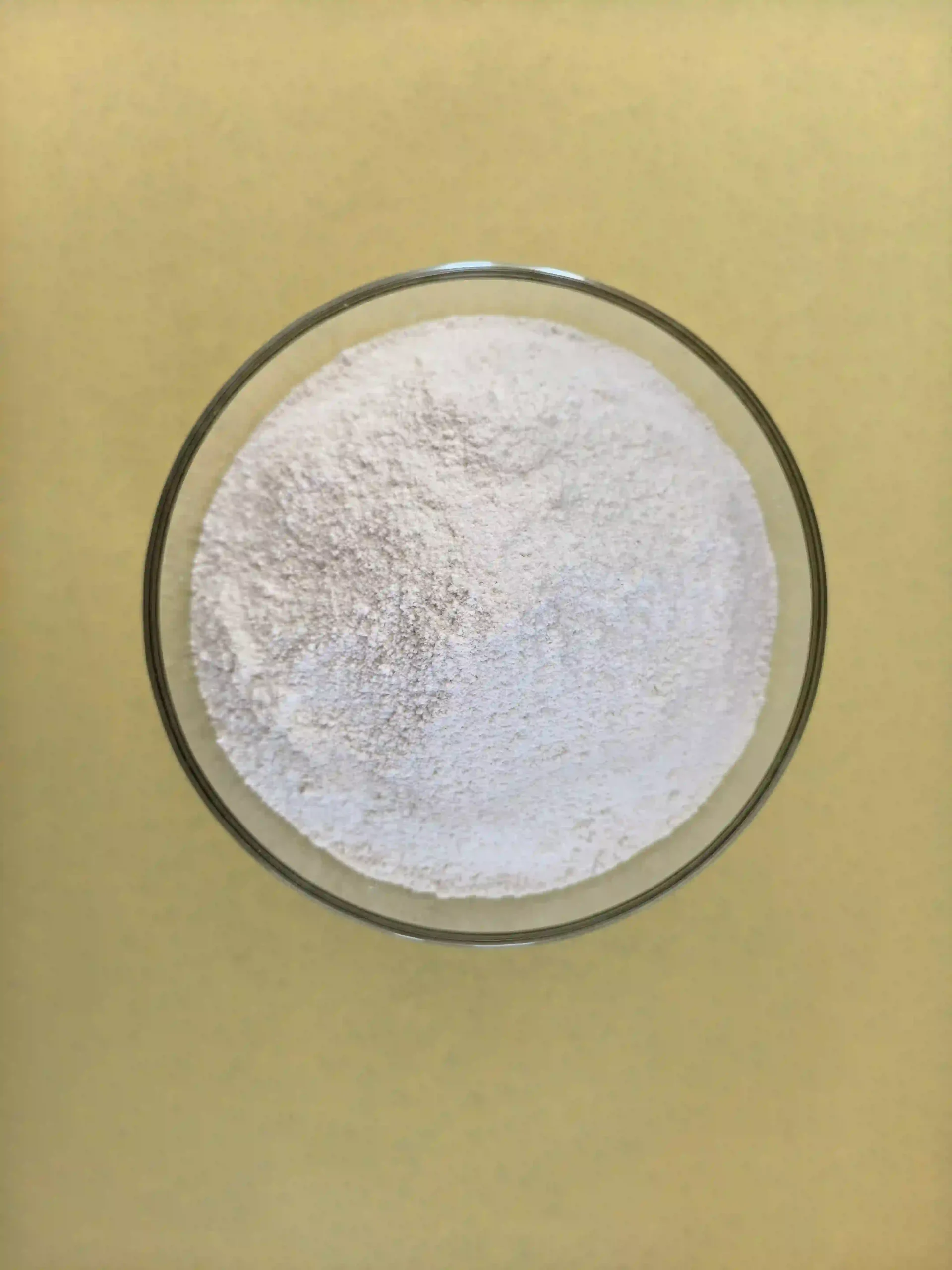
Zinc oxide (ZnO) is a widely used, highly cost-effective wide-bandgap semiconductor material in the field of functional materials today, with a bandgap width of up to 3.37 eV at room temperature. Thanks to its excellent optical, electrical, piezoelectric, and antibacterial properties, combined with core advantages such as abundant reserves, environmental friendliness, non-toxicity, good biocompatibility, and low production costs, it is widely used in various industries including environmental remediation, new energy storage, biomedicine, and smart optoelectronic sensing. Pure zinc oxide materials suffer from significant performance limitations, which severely restrict their large-scale, high-end industrial applications. The most prominent issues include an excessively fast photogenerated electron-hole recombination rate, a narrow visible light response range, and weak electrical conductivity. Additionally, they exhibit poor structural stability under complex operating conditions and are prone to agglomeration and damage. To address these technical challenges, the industry commonly employs modification processes such as elemental doping, heterostructure fabrication, and multi-phase material composites to prepare zinc oxide composite materials. By leveraging the synergistic effects at the interfaces between different components, these processes precisely control the material’s microstructure, electronic structure, and physicochemical properties, thereby compensating for the performance deficiencies of pure ZnO.
Based on differences in functional components, microstructural features, and performance regulation mechanisms, the industry classifies zinc oxide composites into five core types: metal-doped, metal oxide-composite, carbon-material-composite, polymer-composite, and multi-component composite. Different types of modified composites possess unique structural advantages and performance characteristics, enabling them to be specifically tailored to meet application requirements in various scenarios and achieve precise performance optimization.
1、Metal-Doped Zinc Oxide Composites
Metal doping is a highly efficient modification technique for regulating the electronic structure of zinc oxide and achieving targeted performance optimization. Its core principle involves replacing zinc ions within the ZnO lattice with metal ions, which induces micro-distortions in the lattice and defect restructuring, thereby altering the material’s intrinsic physicochemical properties. Depending on the type of dopant metal, these materials can be classified into two major systems: main-group metal doping and transition metal doping, with significantly different approaches to performance tuning.
Doping with main-group metals such as Al, Ga, and In can effectively increase the carrier concentration and charge mobility of zinc oxide. While preserving the material’s high light transmittance, this approach significantly optimizes its electrical conductivity. The resulting transparent conductive composites possess both light-transmitting and conductive properties, making them core foundational materials for optoelectronic thin films, display devices, and photovoltaic electrodes.
Doping with transition metals such as Ni, Co, and Fe creates a large number of active defect sites within the ZnO lattice, precisely regulating the material’s surface adsorption properties and band structure. This significantly enhances the material’s gas-sensing response speed, magnetic properties, and catalytic activity, thereby strengthening its ability to detect and degrade harmful gases and organic pollutants. These composite materials feature stable structures, tunable properties, and mature fabrication processes, making them the most widely used modified systems in the fields of sensing and detection as well as precision optoelectronics.

2、Zinc Oxide Composites with Metal Oxides
Combining zinc oxide with narrow-bandgap metal oxides such as CuO, Fe₂O₃, CeO₂, BiOBr, and WO₃ enables the creation of semiconductor heterojunction structures with highly matched energy levels, fundamentally addressing the core challenges of pure zinc oxide—namely, its limited response to ultraviolet light and high recombination rate of photogenerated carriers. A stable built-in electric field can form at the heterojunction interface, driving the rapid separation and directed migration of photogenerated electrons and holes. This significantly reduces the probability of carrier recombination while effectively broadening the spectral response range, enabling efficient utilization of the visible light spectrum and significantly improving light energy conversion efficiency.
Compared to traditional binary composite systems, ternary and quaternary multi-metal oxide composite structures can form multiple band couplings and multidimensional charge transfer pathways, generating extremely strong synergistic effects that further increase the number of active sites at the interface and enhance charge transport efficiency. Such composite materials exhibit superior performance and greater stability in applications such as photocatalytic degradation, water purification, and air pollution control, making them a key research focus in the field of high-performance catalytic materials.
3、 Carbon-Based Composite Zinc Oxide Materials
Carbon materials include mainstream categories such as graphene, graphitic carbon nitride (g-C₃N₄), carbon nanotubes, and activated carbon. They offer advantages such as high specific surface area, excellent electrical conductivity, strong chemical stability, and good tunability of microstructure. When combined with ZnO, they form a highly efficient synergistic system with complementary functions. Among these, the ZnO/g-C₃N₄ and ZnO/graphene composite systems are the most technically mature and have the widest range of applications.
In this composite system, carbon materials serve as an efficient electron transport framework, rapidly extracting photo-generated electrons from light-excited zinc oxide and fundamentally suppressing electron-hole pair recombination. At the same time, their porous and loose structure significantly increases the composite material’s specific surface area, providing ample adsorption and reactive sites, thereby enhancing the material’s ability to enrich and catalyze the conversion of pollutants. This technical approach effectively addresses the issues associated with pure ZnO powder—such as tendency to agglomerate, slow charge transport, and poor cycling stability—while combining the catalytic activity of zinc oxide with the conductive, adsorbent, and stabilizing advantages of carbon materials. It holds broad prospects for industrialization in fields such as environmental remediation, electrochemical energy storage, and photocatalytic hydrogen production.
4、Polymer-Composite Zinc Oxide Materials
Polymer-composite zinc oxide materials are primarily prepared by composite modification of ZnO nanoparticles with flexible polymer matrices such as chitosan, polyethylene, and polyurethane. This approach fundamentally addresses the structural defects of pure zinc oxide nanopowders, including a tendency to agglomerate, poor flexibility, difficulty in forming, and a tendency to flake off during use.
Through physical encapsulation and interfacial bonding, the polymer matrix ensures uniform dispersion of ZnO nanoparticles, thereby fundamentally suppressing grain agglomeration and microstructural collapse while endowing the composite material with excellent flexibility, film-forming properties, processability, and abrasion resistance. This class of materials fully retains zinc oxide’s inherent core properties—broad-spectrum antibacterial activity, UV shielding, and photoresponsiveness—while also incorporating the characteristics of polymer materials, such as light weight, flexibility, ease of forming, and strong adaptability. This achieves dual optimization of functional and mechanical properties, making it widely applicable in fields such as flexible protective films, antibacterial functional coatings, and medical-grade flexible materials.
5、Multi-Component Zinc Oxide Composite Materials
Multicomponent zinc oxide composite materials are integrated composite systems constructed by introducing a third or more functional components based on traditional binary composite systems. They effectively overcome the performance limitations of single-modification approaches and achieve multidimensional synergistic optimization of properties. These materials integrate multiple modification mechanisms—such as doping, heterojunctions, and loading—to simultaneously optimize electronic structure, interfacial characteristics, adsorption capacity, and structural stability, thereby creating multiple charge transfer pathways and high-density active sites.
For example, the currently mainstream ZnO/CuS/ZIF-8 ternary composite material can enhance visible light absorption capacity and photocatalytic efficiency through the synergistic interaction of multiple interfaces, thereby efficiently degrading recalcitrant pollutants such as antibiotics and organic dyes in water. Thanks to their comprehensive performance advantages, multi-component composite systems have become a core frontier in the current research on high-performance zinc oxide functional materials.
Through modification techniques such as elemental doping, hetero-composite formation, and multi-component synergy, zinc oxide composites have completely overcome the inherent performance limitations of pure zinc oxide materials. They integrate excellent optical, electrical, catalytic, antibacterial, and mechanical properties, representing a class of eco-friendly, cost-effective, multifunctional, and highly promising nano-functional materials.