


The “15th Five-Year Plan” (2026—2030) is a crucial five-year period for China’s tire industry to transform from a “major manufacturing country” to a “strong manufacturing power”. The Guidelines for the 15th Five-Year Development Plan of the Rubber Industry and the Special Plan for the Tire Industry, issued by the China Rubber Industry Association, take innovation-driven development, green and low-carbon development, high-end breakthroughs, intelligent upgrading, and global coordination as the core main lines, and construct a “1+6+6+6” strategic framework (one overall goal, six sub-goals, six key tasks, and six key projects), laying out a clear roadmap for the industry’s development. This is not only a policy guideline, but also an action program for enterprises to restructure strategies, upgrade technologies, and break through market bottlenecks, which provides profound enlightenment for the entire industrial chain.
The overall goal of the 15th Five-Year Development Plan is to enter the ranks of the world’s tire powers within ten years, cultivate 3-4 model leading enterprises to enter the world’s top ten, and form a new industrial ecology featuring independent technology, brand leadership, green intelligence, and global layout. Technically, it is necessary to tackle the “bottleneck” technologies, such as intelligent tires, aviation tires, and new energy-specific tires. The industrial chain should be safe and controllable, with the self-sufficiency rate of key raw materials improved and the coordination of the industrial chain strengthened. The full-chain intelligent transformation should be completed, the intelligent interconnection of people, tires, and scenes should be realized, and the application level of intelligent tires should be significantly improved. Brand influence should be enhanced to build world-renowned brands. At the same time, promote the research and development of green product technologies and increase the proportion of sustainable materials application. The reform path will reshape the industry pattern in accordance with the “addition, subtraction, multiplication, and division” principle. Doing addition means increasing R&D investment and deploying high-end products and service-oriented manufacturing. Doing subtraction means reducing the production capacity of low-quality bias tires (with an average annual decrease of 4.3%) and eliminating backward production capacity and inefficient enterprises. Doing multiplication means multiplying efficiency through intelligent manufacturing, digital twin, and AI R&D, realizing the leap from “manufacturing” to “intelligent manufacturing”. Dividing means removing the barriers of low-end homogeneous competition and promoting the improvement of industry concentration.
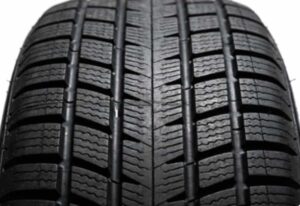
The Plan places scientific and technological innovation at the core, clarifying the full-chain innovation system of “basic research — technological breakthrough — achievement transformation — industrial application”, which enlightens enterprises that they must get rid of “low-cost dependence” and turn to the construction of technological barriers. Focus on breaking through four key areas: new energy-specific tires, intelligent tires, aviation tires, and high-performance engineering tires. New energy tires need to adapt to the “high load, low rolling resistance, and long battery life” needs of electric vehicles, tackling low rolling resistance formulas, noise reduction technologies, and lightweight structures; intelligent tires need to break through technologies such as tire pressure monitoring, road perception, and data transmission to achieve in-depth integration with the Internet of Vehicles; aviation tires and large mining tires need to realize domestic substitution to ensure national strategic security.
The Plan takes green and low-carbon development as the strategic direction, enlightening enterprises that they must build a full-chain system of “low-carbon production — green products — recycling”, otherwise they will face the risks of market elimination and non-compliance. Adopt clean technologies such as closed rubber mixing, low-temperature vulcanization, and waste heat recovery; eliminate high-energy-consuming intermittent furnaces and promote continuous and intelligent green production lines; establish a carbon accounting and carbon footprint management system to meet international carbon compliance requirements. Develop green tires with low rolling resistance, recyclability, and lightweight; meet environmental protection standards such as the EU Tire Labeling Regulation, and break through green trade barriers. Improve the waste tire recycling system, promote high-value utilization technologies such as pyrolysis, reclaimed rubber, and rubber powder, and realize the closed loop of “resources — products — waste — recycled resources”; promote coordination between tire enterprises and recycling enterprises to build a full-life-cycle green ecology.
The Plan clarifies intelligence as the core engine of industrial upgrading, enlightening enterprises that they must restructure the entire processes of production, R&D, marketing, and services through digital transformation to achieve dual improvement in efficiency and quality. Build digital twin factories to realize visual and precise control of the entire production process; promote equipment such as automatic batching, intelligent rubber mixing, online testing, and intelligent warehousing to improve batch stability and production efficiency; build an industrial Internet platform to realize data coordination between upstream and downstream of the industrial chain. Develop intelligent tires with perception, transmission, and decision-making functions to adapt to the development trends of autonomous driving and the Internet of Vehicles; promote in-depth integration of tires with vehicle control systems to realize functions such as active safety, performance optimization, and remote diagnosis, transforming from “selling products” to “selling products + services + data”. Provide customers with value-added services such as customized solutions, remote operation and maintenance, and performance monitoring to enhance customer stickiness and brand loyalty.
Faced with trade protectionism and the restructuring of the global supply chain, the Plan emphasizes deepening opening-up and cooperation, enlightening enterprises that they must build a development pattern of “domestic and international dual circulation” to improve their global resource allocation and market competitiveness. Build localized production bases in key markets such as Southeast Asia, Europe, and North America to avoid trade barriers and get close to the terminal market; optimize the global supply chain layout and improve the global acquisition capacity of key resources such as natural rubber and synthetic rubber. Strengthen cooperation with international automakers and tire enterprises to expand the high-end supporting market; build national brands with global influence and change the international image of “low price and low end”. Establish overseas R&D centers to integrate global technological resources; participate in international scientific and technological cooperation projects, introduce high-end talents and advanced technologies, and realize the coordinated development of “global R&D, global manufacturing, and global market”.
The 15th Five-Year Plan for the tire industry is a guide for the high-quality development of the industry and a historical opportunity for enterprises to transform and upgrade. In the next five years, the industry will bid farewell to the era of “scale expansion” and enter a new stage of high-quality development led by innovation, green and low-carbon, intelligent and efficient, and global coordination. Only by deeply grasping the enlightenment of the Plan, actively embracing changes, breaking through with technological innovation, laying the foundation with green transformation, improving efficiency with intelligent upgrading, and expanding the market with global layout, can enterprises stand out in the fierce market competition.